The Big Picture

From “Liar’s Poker” to Today: An Evening with Michael Lewis


A bonus LIVE episode of Masters in Business:

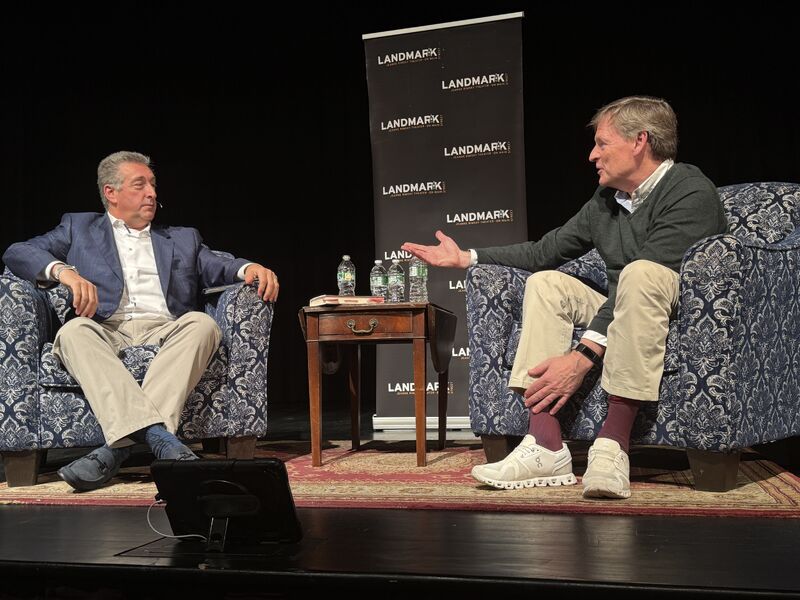
I spend most of the evening listening to — and laughing — with bestselling author and financial journalist Michael Lewis, live from the Landmark Theater in Port Washington, NY.

Our wide-ranging, 90-minute conversation covered the full arc of his career, from “Liar’s Poker” to “Who is Government.” The informative – and often hilarious – conversation included his experiences turning Moneyball into a film (including on-set hijinks from Brad Pitt), how his career as a writer evolved, and what he is working on next. (His latest book, Blockers, is out on October 6).

You can stream and download our full conversation, including any podcast extras, on Apple Podcasts, SpotifyYouTube, and Bloomberg. All of our earlier podcasts on your favorite pod hosts can be found here.

You DO NOT want to miss this fun, rollicking live episode of Masters in Business.

Transcript below


Michael Lewis LIVE Transcript:


This is Masters in Business on Bloomberg radio

Barry Ritholtz: Another Masters in Business Live, this time with Michael Lewis.

I’ve been fortunate to interview the poet laureate of finance, I don’t know, maybe a dozen times, 10 times over the years I’ve interviewed him after each of the last few books.

And, I’ve interviewed him live at a couple of conferences and events. I’ve had dinners with him. I’ve gotten drunk with him at a bar late at night. Imagine the greatest storyteller of your generation, and then sitting at a bar and having a couple of drinks with him; it’s every bit as spectacular as you would imagine.

So when I read that his new book was coming out. I said, “Hey, if you’re interested in speaking to a small group at a local theater, I’d be happy to to set that up.” And, his book  PR people said, “Great.”

So at the Main Street Theater in Port Washington to a crowd of just 300 people, he regaled us with stories for 90 minutes. You’ll hear almost no me in this, because my job was just to give him a nudge and then stay the hell out of his way. You could tell the audience loved it. It was so much fun, there were plenty of I had never heard before, listen for the story about Billy Bean and the f-bomb.

It really is special . . .I thought this was a blast, and I think you will also. With no further ado, Michael Lewis on his new book, “Who is government” and his career as a writer.

~~~

Barry Ritholtz: Welcome, Michael.

Michael Lewis: It’s a pleasure. Thank you for having me.

Barry Ritholtz:Welcome to the North Shore of Long Island to Gatsby, Long Island.

Michael Lewis: I’ve seen none of it. It was dark and rainy. Is it?

Barry Ritholtz: Let’s start out, how, how you doing? How’s the book tour going?

Michael Lewis: So it’s called Who is Government?

Barry Ritholtz: Who is government?

Michael Lewis:You said, “What is government?”

Barry Ritholtz: Yeah, the same thing. Who is government?

Michael Lewis:And, it’s an odd, it’s an odd. If we’re gonna be honest here. There are books and there are book-like objects. And this is closer to a book like Object, because I didn’t write the whole thing. I wrote, I wrote a third of it. Mm-hmm. I, I love it. But I, but I got, I am, I have six other writers that I hired to do this with me.

I’m answering this the way I’m answering your question. The book tours, it’s normally my least favorite part of what I do for a living. It’s, and, and I don’t know why that is. I just don’t because it’s a slog. It’s, it’s, I don’t like being on tv. But you gotta do that. I don’t, the the business of presenting yourself this way is so different from the business of writing the book that it’s jarring in, in the first place and then the worst thing happens. 

You start to like it. And, and then you get, you get going back in to like, being a writer book is jarring. But, but the, the thing that is usually a, a problem is that, you know, you’re kind of on the line, you know, it’s your book, it’s just you’re out there alone. Now, if people say it sucks, I can just say it’s the other people who are responsible.

And so I feel it’s kind ofit’s kind of a, it’s kind of a pleasure, this one compared to the others going out and talking about it.

Barry Ritholtz: So I’ve only seen you with some of the other authors once or twice. You were on some show with, Kamua Bell and I don’t think you were, I haven’t seen you with any of the other co-authors.

Michael Lewis:Did you see the, did you see it was Morning Joe with Kamal Bell? (Yeah.) All right, so Kamal be, is a six foot, five inch, 300, 250 pound black man. Right? And, and he shows up at Morning Joe in a sweatshirt that says immigrants aren’t criminals, but the president is one. And, and, and, and, and they say. They say you can’t wear that on tv.

Joe is not there. He’s remote and so they, they try to find something that will fit Kamal, be nothing will fit Kamal be Is that why it was inside out? Is that what he did? No. What he did, no, it gets worse than that. They then tried to get him to flip it around and it looked ridiculous. Then they put it right side, the right side out again and they put black tape over just the bottom part of that.

And then when they, by the time we got, he got finished, we’d lost our segment. They, they, they, they’d run out of time and Joe was heading off to Dr. There’s another hour Joe was headed off to drive his kid to school and they called him and said that we can’t have him on because you know, we can’t figure out what do with the sweatshirt.

And Joe Interceded and said, have him wear the sweatshirt. He can make sure everybody can read it. And put him on and Wow. And what was, but what was really weird about it is that though Joe was comfortable making that statement on his, on his show, n none of the authorities in the actual studio were, and so they frame Kamau, it’s like this giant head and you can’t see anything.

And the whole time he’s talking, he keeps going, he goes, he’s going like this with a sweatshirt. [I saw that}. Did you see that? Yes. Yeah. No, it was, it’s incredibly distracting. I was trying to have a conversation and he’s, this man is doing this thing with his sweatshirt. But yes, mostly it’s been, I mean, I, I’ve done some stuff with some of the co-authors, mostly stage stuff.

So I’ve been on stage one way or another in one city or another with all of them or each of them.  but most of the, most of the other stuff, the TV stuff I’ve had to do on my own.

Barry Ritholtz: So I want to get to this book in a minute, but first I wanna set the stage with the arc of the two prior books [’cause] I that are related to this. Well, exactly. That’s what I’m teeing up.  I’m just trying, don’t get ahead of me. Just trying to help.  So the premonition was how the US really did a mediocre job. During the pandemic, you focused on charity Dean and the pandemic emergency response team and the mess they had to clean up.

I’m curious how that book led to the Fifth Risk, which was the book,  that was the predecessor to this. So I’m gonna have to help you. Go ahead. The fifth risk is before this. Before the, before the premonition. It goes Fifth Risk Premonition this

Barry Ritholtz: Then, withdrawn. Okay.  So, but, so the Fifth Risk is the predecessor book to this.

Michael Lewis:Yes. How did that lead to this book? Yeah, so that, there we go. I’m sorry, I got the order wrong. Yeah, yeah. Sorry about that. And, and your wife, Wendy, is here somewhere in the front row. I’m so sorry you’re feeling poorly, but thanks. Thank you for coming,

Barry Ritholtz: By the way, wouldn’t be the first time you’ve embarrassed me in public and we, we could save that conversation for later. [Okay. But, okay.] How did those books lead to this book?

Michael Lewis: So, this is how it happens. It’s really simple and it is all none. It all seems worthy from a distance. Like I have some great political or social purpose. In fact, it’s all literary opportunism. Trump is elected the first time. Trump fires a day after his election his transition team and enterprise, I didn’t know existed until I read he’d fired it. But it was 550 people that Chris Christie assembled for him to go into the government and receive from the Obama administration, the briefings that a thousand people in the Obama administration had by law, spent six months preparing.

So given it’s Obama, it’s probably like the best academic course in the history of the government, on the government. And, Trump fired the people who were gonna go listen to this. Like they just said, we don’t need. And he told Chris Christie — Chris Christie told me, he said — we’re so smart, that it’ll take us an hour to figure out how the government works. We don’t need that.

And I thought this is like a great comic premise that, that, that I can go and wander around the government, get all these briefings that he didn’t bother to get, and the reader will feel rightly like they know more about the government than the president and the president’s supposed to be running it.

And the, that book, it was, it’s, it was a series again, it was more of a book like object. It was three long Vanity Fair pieces plus a piece, that, so it just happened to work as when you glued ’em all together. But I picked intentionally the departments that nobody paid any attention to. So not state or treasury or anything like that. I picked commerce, agriculture, and energy. Ones where if I turn to my neighbors in Berkeley, all of whom have, are inflicting their political opinions upon me constantly, if I say, what does the Commerce Department do? They, I get a blank stare. They have no idea. And I found in those places one really good material, like all of the places sort of like matter.

There’s stuff going on in each of them that’s really, really, really important.  but unbelievable characters. Can I tell you about one character?

Barry Ritholtz: Sure. but I don’t want before you, [I don’t want you got, your train is on the track and I don’t want to interrupt]. Well, you’re, you’re just skipping the best part of how did you get access to all these people?

You kinda left out if there’s this giant transition team that was supposed to be for the incoming Trump administration and he fired them all,how did, how did you get access to this?

Michael Lewis:He fired the ones who were going in to listen to the briefing. So you just, the briefings were still there in some ways. Like in some places, like the Turkey sandwiches were still moldering and, you know, that they had prepared, they had figured out what drinks they might want. It was all, all set up.

Barry Ritholtz: So you reach out to,who?

Michael Lewis: I reach out to, in the first place,  people inside the energy department, I, I got some names of officials in the energy department, started with the outgoing Obama people, but quickly got into the civil service.

Cause the civil service does the briefings.  I mean, they’re the ones who are. I mean, in the energy department, for example, running a $50 billion cleanup of the nuclear waste left behind in eastern Washington from the building of the atom bomb in the 1940s, it’s still going on. You know, there’s like that thing, there’s, there are all these things.

There’s a nuclear arsenal. I went and I went and met with the people who managed the nuclear arsal arsenal, and they couldn’t tell me the, there was classified stuff, but they could tell me a lot. And their attitude was, we’re so grateful someone’s come to listen. Like, like we did all this work to like explain how it all works.

And, and, and I started with energy, but not I, you know, it could have gone anywhere. But I started with energy because I don’t know if you remember, but Rick Perry was [Oops!] Oops. Was Donald Trump’s pick for Secretary of Energy? ’cause he, ’cause he, I mean, in Trump’s mind it looks like oil Texas, right?

Looks good on television. But Rick Perry had called for the elimination of the energy department when he was running for president. And that’s a little awkward. You’re gonna go be running this place when you said it shouldn’t exist. [Tough first day]. But he had no idea what was in it. And the minute he found out it was in it, he went to the senate, his senate hearings, and said, God, I’m really sorry, con, I like, I was wrong. You shouldn’t get rid of this place.

So I went there because he was, because I just thought this is like, this is the reductio ad  absurdum of this, this ignorance. And the pieces, the pieces really worked. Like they, I mean, the material was so good, but what happened as I crept my way through the obscure parts of the federal government, I kept meeting incredible people — I was not, I did not have a picture in my head of who who the federal employee was.

What I was meeting was very different from what I had imagined. And so the book comes out, it sells half a million copies and it’s glued together, Vanity Fair articles, which told you that there is a interest in a civics lesson. Which is what it was kind of. And I got the problem of having it write it as you will soon have, and afterward to the paperback, it comes out a year later.

And I thought, you know, I kind of, although it’s worked so far, I’m, it bothers me that I’ve not done a deep dive into one of these people. ’cause the people, they’re, they were, they were mission driven, usually very expert in some very narrow thing, completely incapable of telling their own stories.  walled off by political people, so they weren’t allowed to tell their own stories, oblivious to the sense any themselves as characters.

But, but that’s great. Characters don’t know their characters. I mean, the fact that you don’t know you’re a character makes you an even better character. And I thought, I’m just gonna pick one of these people. So who. Now when I had this problem, Trump had then shut down the government. It was, it was the first, it was the government shutdown of 18 and 19, early nine.

It was early 2019, and he had furloughed 60% of the civilian workforce sent them home as ential workers who without pay. So I got, there is an organization in Washington called the Partnership for Public Service that tries and fails over and over to get positive attention shined upon these federal workers and they give an award called the Sammy Award to people who do something good in the civil service.

It’s been going on for, this has been going on for two decades and still no one pays it any attention, but there’ve been lots of nominations for those awards, thousands of them. So I cross referenced like anybody who’s been nominated for a Sammy and that was like 8,000 people or something with who’s been furloughed.

And the list came back and it was like 5,000. It was some huge list. And I thought, what the hell am I gonna do with this? It was alphabetized. I just took the first name on the list. “Arthur A. Allen.” He was the first one on the list, and I found his phone number. I called him up and said, I wanna come talk to you about what you do. And I didn’t really know what he did.

So this is the beginning of this book, because what happens with Arthur A. Allen, I go see him. He is the, the lone oceanographer in the Coast Guard Search and Rescue Division. He’s been at it for 30 something years. And he, he pretty quickly is, tells me that like Americans have this unbelievable ability to get lost at sea, to just like, we just do it better than anybody else.

And so the Coast Guard just rescue is constantly occupied. He figures out some, a few years into his career, he witnesses a tragedy. He’s, he’s out in the field. He’s at the Chesapeake Pace Station. A storm summer storm comes outta nowhere. The Coast Guard is pulling people off the Chesapeake Bay. They discovered that they got everybody, but there’s one boat missing and it’s got a, a woman who was Art’s wife’s age and a little girl who was his daughter’s age.

And they’re, they, they know because they know when the storm kicked up, when the boat likely capsized, they were on a sailboat. And they, so they know and they know where they were when they capsize, kind of. But what they don’t know, presuming that they’re on, on the upside down boat, is how that upside down sailboat drifts at sea. Objects drift differently. Like if you’re in an inner tube, it’s, you’ll move in the ocean differently than if you’re in an upside-down sailboat than you would if you were on a life raft, you know, and so on.

And they find the girl and the mother dead the next morning and Art says, that’s never gonna happen again.

When he is telling me this story, like. What he’s done with his career, a bunch of things. But he has basically invented the science of studying objects drifting at sea. And he’s told me, and at this point in our interactions, I’d been, I was there a couple days before, I said like, why did you even bother to do this?

And he goes over to his bookshelf and he pulls this yellow newspaper article from the Norfolk, whatever, about this mother and child. And he starts to cry. He said that, that could have been my wife, that could have been my child. And when I saw when that happened, I said, it’s never gonna happen again.

So he starts studying how objects drift and throwing them into the Long Island Sound from he lives in Connecticut and he classifies a couple of hundred objects, the results they, and reduces their drift patterns to mathematical formula.

Like 10 days after the Coast Guard gets his formula, 350 pound man, this is a very American thing to do. I remember runs out of his window on a cruise ship in the carnival on a Carnival Cruise line, cruise 80 miles east of Miami and isn’t discovered missing for like several hours. And he does it at night

Because they have cameras on the side of the boat. They know when, when he, they can go back and say, oh, this is when he went off. But Art had studied fat man at sea and

Barry Ritholtz: That’s a thing? Fat guy’s floating at sea?

Michael Lewis: He had a fat, he actually studied large and smaller people and he had fat guy at sea and which will turn out to come turn out to come in very handy in future years.

But this is the first time. Fat guy at sea who goes over off a boat and isn’t discovered missing for a few hours in human history. He’s dead. Like, it’s like finding a person at sea is like finding a soccer ball in the state of Connecticut. You just, it’s, it’s almost impossible. They pluck this dude out of the water like seven hours because he’s fat.

He can live forever. You know? You not, no hypothermia. The risk is someone so’s gonna swallow it, but that’s it. And it’s really a huge advantage to have that fat. And they pluck him out and he’s sort of like, kind of cool. He’s like, like, he’s not panicked or anything. He’s just floating at sea. But they, he, he, they pull him out and there are all these articles about like how great the search and rescue people are who pulled him out of the sea.

No one asks, how’d they find him?

The Coast Guard themselves are shocked, like, how well this worked. And this goes on. I mean, I taught, interviewed another fat guy who fell off another boat in, in, in the Pacific. And I, who was saved miraculously after like eight hours. And I said, like, how do you think they found you? And he said, what, how, what saved you? Or something?

And he says, when I was floating in the ocean, I accepted Jesus Christ as my Lord and Savior, and that’s why I was saved.

And I said, no, no, no, no, no, you’re saved. ’cause of Arthur A. Allen, you know, that’s who saved you. But nobody paid, had paid any attention to this dude and what he had done.

So I spent a few days with him listening to the, I mean, the whole intellectual stuff about how what he did, how he did what he did. It was riveting. But the motive, like this I’m not gonna let another American die because they, we don’t know this. He fixes the problem. Thousands of people are alive today around the world because of what he’s done.

He’s been honored by other countries, Taiwan and Australia. But we pay him no attention. So I gather my stuff to go write my, the end of my book and, and I’m on my way back to the airport.

And he, after I’ve spent the time with him, and he calls cell, this is the moment this book starts, he calls my cell and he says, Hey, you are a writer. And I said, I’ve been there with my notepad. You know, I’ve been like, I’ve been, I know I had said something when I called him, but I said, and he said, he said, man, he said, I was just talking to my son. He says, like, you’ve published books and like one of the books became movie. A movie. And he goes, are you gonna, are you gonna write about this? Are you gonna write about me?

And I said, yeah, Art. I mean, why do you think I flew across country and spent three days interviewing your wife and children and all the rest? He said, I just thought you were really interested in how objects drift.

And, and, and, and, and this is, this, this, this is your One, an inessential worker. Two, your public servant, your civil servant. They have no sense. Like they deserve any kind of attention. The stories that come out of them are amazing. And I thought, man, I should have done it the first time. I should have been diving into these people’s lives. So the next time, if I ever come back, I’m gonna come back focused on the people.

And when I, I was on a hiking trail with David Shipley, who was once until recently, the opinion editor of the Washington Post. And he had space and he had money and his, and he, we could write as long as we wanted in his pages, he said, I said, let me, I’m worried that if I go do this, it’ll just be either, “Oh, this is Michael Lewis’, take on the federal government, or I made it up.”

Or whatever, like, whatever. Whenever people don’t want to hear the message, it’s very easy to come after the writer and try to undermine the whatever’s in the,

Barry Ritholtz: Is that why you picked six other writers? That’s what I did. I said to shield the accusation of bias?

Michael Lewis: also to get a bit, a little bit of a bigger kind of sample, like not gonna tell ’em what to do. I didn’t even tell ’em why I, what, what I was gonna do. And I’ve done two of these big profiles in here and the material is as good as ever.  but I said, we’re just gonna, you just go into federal government and wander around and find a story. And six out of the five out of the six other six did much of what, basically what I did, they found unbelievable character studies, individuals doing things that were just to shock them.

One, he’s, he’s a wonderful writer, John Lanchester, English writer.  decided instead that his character was the consumer price index, which is a challenge.  but he actually makes it work. It’s ’cause it is an amazing achievement. But he, he writes, so he, he went off the reservation a bit.

Barry Ritholtz: I’ll push back on the characterization when we come to that chapter. Right, right. ’cause I have a different spin on that. Oh. But, but let’s talk about some of the chapters in here, starting with Ronald Walters of the National Cemetery. I can’t start with myself.

Michael Lewis:You wanna start that way? I mean, other, other people’s. I edited it, but other people, other people. I give you such a sh I will tell you.

Barry Ritholtz: So you wanna start with the coal mines? Let’s start with No, no, I don’t wanna, I I’ve already muscled you around too much.

Michael Lewis: Feel free to muscle. I’m the fish and you’re the fisherman. Okay. You’re supposed to be landing me.  but it’s, um.  Ronald Walters. So this is the one, the one writer who came to me after I had employed them all and said, is there anything on your cutting room floor that you would like to have written about that you didn’t write?

I said, well, that’s funny you say,  but yes, it’s Ronald Walters. Casey Sepp, who’s a wonderful New Yorker writer. She, she wrote a book about Harper Lee called Furious Hours. And we met because I reviewed that book for the New York Times so favorably she got in touch and sent me toffee boxes of toffee.

But, but when we became friends, Ronald Walters, this I’ll be brief because I didn’t get to know him. You know, I’m just read, I’m reading it like you, but what it intrigued me, Ronald Walters is in the Veterans Administration. I think he’s the only one who still has his job securely, but he, he may be insecure now too, but he took over these National Cemeteries Association, the cemeteries that where we bury veterans.

And there are like 55 of these things around the country, like 4 million veterans are buried in them. They’re burying them. It’s at an astonishing rate and it’s sort of like, it’s a sacred duty. It’s where we bury our war dead. It’s where we bury people who’ve made great sacrifice for the country. And it’s a tribute to the country that we take it seriously, that the Veterans Administration even has this program.

But when he inherited it, it was struggling in its, it’s a weird way to put it, consumer satisfaction. The consumers in this case were the loved ones of the people who were being buried. And he took it from, and we know this because the University of Michigan measures customer satisfaction across the society. It’s all institute big institutions, not just it’s private sector, but also government agencies. And it was kind of like most of the government agencies, kind of high sixties. It was like a mediocre thing.

And in a period of a decade, Ronald Wal Walters took it. To being not just the enterprise in the United States government that had the highest customer satisfaction, but the enterprise in the entire country. More than Costco, more than Amazon or FedEx or the other ones that people like it.

And no one knew his name. No one knew how he did it or why. And I, I had, when I was fiddling around with picking someone to write the, afterward for the Fifth Risk, I’d heard his story. And I almost, I tried calling and actually they didn’t even return my calls. The veteran administration wouldn’t talk to me.

So,  so it was there and I said, go, go find that out, out about that. And so she writes about how he did what he did. It’s an,

Barry Ritholtz: It’s an absolutely beautiful chapter. It actually made me cry. Did it? It’s the only, only chapter in the book that, that brings tears to your eyes. Let’s talk about coal mining and how dangerous it is. Let’s talk about your first chapter.

Michael Lewis:So, so another, so this is. I mean, it, it’s so unusual to find such a rich vein of material that is basically unexplored, that is so predictably yielding gold. And this, so this is, this is number two for me. I’ve done our Allen, I’ve done the, the agencies.

II’m gonna go pick another person. So I went back to, kind of did it the way I did it before. I got a list of the people who were nominated for Sammy’s awards this year or last year. And this list was almost 600 people. And because it’s, they don’t know what they’re doing.  I mean, they know what they’re doing in some ways, but they just don’t know how to create interest in people.

All these, this list of the people who’ve been nominated for the award, it just said their name and what they’d done. And you looked at the accomplishment and they were often amazing. It was like, you know, you know, it, it, but it would, it would never say how they did it, you know, “Cured cancer” but that was it kind of thing. John Smith at the National Institute of Health Cure Cancer, period. End of story.

I was going through this listening. It was all just cold-blooded, you know, it was just like, until I get to Christopher Marx,  solve the problem of coal mine roofs falling in on coal miners, which has killed 50,000 American coal miners in the last century, leading cause of death in the most dangerous occupation in the country.

The occupation is so dangerous that it was more dangerous being in a coal mine than being in the Vietnam War. That’s how, that’s how dangerous it was. But the last sentence said he was a former coal miner. They finally gave me some, something to think about. And so I looked and I thought, man, there has got to be a story here.

I mean, I’m thinking grew up in West Virginia, like Dad was injured or killed, or see, you know, there, there’s some, how this person gets out and does this. So I had spun this whole tale up in my head.  and I find his number, and again, like our ally, he’s lives in Pittsburgh. I call him, I cold call him. In this case, he knew who I was.

He’d read Moneyball and it turned out that he thought of himself as money balling coal mines. But that’s a whole separate thing.  but, but,  he, he, he, I say, I just wanna hear, I just wanna hear your story. Like give me the, the 10 minute version. I’m gonna give you the five minutes of the 10 minute version because it hooked me.

He says, I grew up in Princeton, New Jersey, and my dad was a professor at the university. And I thought, oh, like my whole movie is different, you know, I don’t know what the movie is, but this, this not. And I thought, oh, my interest just went. And then he started to tell me, he says, if you looked at just a little bit, you’d find my dad was kind of famous.

Robert Marks was the name. And Robert Marks had been brought, brought to Princeton without a PhD. To help Princeton. He had devised a mechanism for stress testing. He was stress testing fighter planes for the Navy and the Air Force before they built them. He take the design, build a little model, and he had this, this complicated way of just testing whether or not this design was going to actually work in practice.

And Princeton had brought ’em in to test little nuclear reactors they wanted to build to see if it was gonna crack. And Robert Mark one day was teaching an engineering class at Princeton. When an undergraduate walks in from an art history class and says, this device you have, could you use it to like figure out what’s holding gothic cathedrals up?

Because we just, they just told us that no one understands how these, the roofs of gothic cathedrals don’t collapse. There’s no records left by the builders, then they’re built over a century. No one knows what’s decorative, what’s actually holding the weight. And he said, yeah. And he became famous because he became the guy who figured out how they built the gothic cathedrals and what was keeping them up.

What was keeping the roof up. So that’s Robert, that’s the dad. Chris is telling me this in the first 15 minutes I’m talking to him. He says, so that was my dad. He said, I, I had a problem with my dad’s life. It was the Vietnam War. I got kind of radicalized. I thought I, I saw it wasn’t Princeton kids who were fighting and dying.

And that really bothered me. And he said,  I, he, he said, he started throwing words around the house like bourgeois. And, and pretty soon he said, I’m not, he could go have gone to Harvard or Princeton. I’m not gonna do that. I’m gonna go join the working class. So he breaks with his dad, big break. He goes on the road.

He works in an auto factory, works in the UPS plant, and finally ends up with several fellow radicals in a coal mine in West Virginia. The other three radicals all quit at the end of the first day. It’s that brutal. He finds it interesting. Why he finds it interesting is still a bit of a mystery, but he stays in the mine for a year and almost dies twice that he sees how dangerous it is.

He crawls out of the mine, goes and gets a PhD, an undergraduate and a PhD at Penn State in, in rock engineering, and begins the process of figuring out, he, there’s all this data that the US government has co collected on. They’ve, they’ve observed the problem. It’s a bit like the CDC does with the disease that they’ve observed the problem without actually trying to stop the problem.

So they have all this data on when roofs fell and what the conditions were. He just, he starts to study it. And over a career, a really, really interesting career figures out how to stop this from happening and stops it from happening. So he is telling me this on the phone and,  I did gimme all the details of his work, but, and, and I stop him and I say, oh.

So you rebelled against your dad and then you just went and had your dad’s career. He was, he figured out how to keep the, what was keeping up the rules of gothic cathedrals and you figured out how to keep the rules of coal mines up. And, I mean, this is someone I’ve just started talking to on the phone.

He gets outraged. It’s like bull***, you know, like I’m calling, you know, that has nothing to, I had nothing to do What I did, had nothing to do with my father’s career.  we, we have nothing in common. Completely different thing if that’s your theory, like go away kind of thing. And I said, just seems a natural observation.

So so two things. when I, I went and spent a lot of time with him. We rolled around West Virginia. He took me into coal mines and he doesn’t mention till like the third day that, oh, you know, it was funny. I were, you reconciled. When did, how did you reconcile with your dad? And I asked him, ’cause they had become reconciled before his dad died.

And he said it was gradually, he said, but there was this moment he said, I. The National Cathedral,  the federal government thought the National Cathedral in Washington might be falling down. This was in the year 2000. One of the towers was subsiding faster than the other. And,  they didn’t know why. So they called his dad to test to see how the load was moving through the National Cathedral.

And the dad figured out that his stuff didn’t work because whatever was going on, it wasn’t above ground, it was below ground. So he called his son, and his son had the stuff to go figure out what was going on below ground. And together they wrote a paper about how the National Cathedral, how it was, what was gonna happen.

And we didn’t have to worry about it falling down, but they studied it together and put everybody’s minds to rest. Now, when you have that to navigate too, in a story, you got a story. I mean, it’s just like that. And, and so Art Allen had the Yellow Wing newspaper.  Christopher Marks had the, had the, the dad.

I met, but I gotta say I’ve met lots of people in like the Storm center and the National Weather Service who lost loved ones to tornadoes or that, that this instrument, the federal government is filled with all of all this purpose, all these things that, that it’s where the problems of the private sector doesn’t wanna deal with go, you know, you know, it’s like if there’s no money to be made in it, but we’ve decided as a society we wanna address it.

That’s where the, that’s where we, that’s what we use to address it. Who, who is attracted to these problems? People who have a particular interest in this problem for whatever reason. And that quality, like caring about the problem, it’s outside yourself. I’m gonna fix the problem, tends to come from a deep place.

And that’s where literature comes from. You know, it’s the, the, the motives of the characters are, are,  are in our government. These are rich and interesting people with rich and interesting backstories and, and.  you know, e every time you kind of start scratching at one, you get at this.

BR: So, so let’s address that a bit.  I wanna discuss your process a little bit, which I’m fascinated by. You once said to Malcolm Gladwell at the 92nd Street Y “the subjects choose me. I don’t go looking for books. The stories wander into my life and they get to the point where they can’t not be written. The stories kind of find me, a relationship develops between me and the story.”

ML: I have no choice. That’s true. So, so expound on that a bit. You want the three minute or the five minute version? Whatever you’re comfortable with. Alright. I mean, this goes back to who I am. I mean, I’m basically. I’m a new, I grew up in New Orleans, was raised to be a decorative object. I was raised to, what does that mean?

Not useful. Okay. Like, like nobody around me did anything useful and no one planned to, and hence you end up on Wall Street there. No. Yeah. Well that’s funny. But, but, but there’s a certain charm you acquire on the streets of New Orleans that are very useful when you’re trying to sell a bond.  but it’s that, but yes, so a lot of New Orleans make their way to Wall Street.

They do quite well on Wall Street. You get the gift of gab kind of thing. But,  you learn to tell a story, which is very valuable in the financial markets and also valuable, very valuable to writers but I, I’m basically lazy, like that is true. Um. You know, it’s, it’s it’s core in me. Like the working part of me has been added on somehow.

But the deep me, I would just sit around, scratch myself for the rest of my life.

BR: If, if you, you’ve written 14 books, how is that lazy?

ML: This is, I’m, I’m not lying. This is this. I’m telling you the truth. You’re just gonna have to figure out, you gotta make sense of it. Okay.  this is God’s truth.

My father, when I, from the age of about seven to the age of when I was 18, had me persuaded that there was Latin, we had a coat of arms. Lewis, Lewis, and there was always a Latin under it. He persuaded me that what that Latin said was you translated. Was, do as little as possible. And that unwillingly for it is better to see, receive a slight reprimand than to perform an arduous task.

My father raised me to be lazy, you know? I mean, that, that he was like, don’t try, don’t, don’t sweat it. You’re working too hard. It was the, it was, this is the environment I was raised in and I took to it.  but, but you didn’t, you, but I did. Up to a point. Every book you’ve written, you embed yourself now in unfamiliar places, learn.

It’s also true. You learn. It’s also No, it’s true. It’s, I’m curious. I got that too. I’m actually curious. I see something and I want to know about it and, and it happens a lot. It just happens a lot. And so it’s a, with pleasure, I find I pursue a curiosity. I ask like, curiosity. Why are the Oakland A’s winning baseball games with no money?

Like, how is that possible? That’s a beginning, that’s a curiosity. I, and so I go to the trouble, but most people have that thought and go, eh, who? Who knows? And then fun. And, and you, you spend, you spend weeks and weeks and wait years. Wait, so, so, so, so it is not, it is true that I do the work. It is true. I eventually do the work, but I do from a place of deep laziness.

It’s deep. It’s like that, it is, I get curious. I start to get involved. I realize, oh my God, this is, look at this story. And it is, it is got to, it really does have to rise to the level in my mind that this story is so important and it’s delusional. Like is any story that important? But it’s, the story is so important that I have an obligation to do it.

So now I, now I have to do it because I have an obligation. I make myself feel that way. And when I feel that way, then I’m off.  then, then I forget about the laziness and I do the work.

BR: So you have this incredible knack of finding yourself in the right place at the right time. Before everybody else figures out this is what’s so this is an incredibly lucky thing.

ML: Okay, so I mean, but it’s, I’ll give you that. This one’s Lucky

BR: Liar’s Poker. You’re there early in the rise of Wall Street. It was working. Okay. You were working Moneyball. No one had any idea what was going on with Saber Metrics and how this scrappy little broke team was able to put together a competitive run;

Going Infinite. You embed with FTX and Sam Bankman Fried a year. That was kind of cool. That was a year before, right, but you after, but that was also after the, I didn’t know that was happening. Oh, oh, you didn’t know that was happening. And then the whole Undoing Project with Danny Kahneman, who just coincidentally lived down the street from you.

You have this ridiculous knack to finding yourself at the head of a wave that’s about to crash over society. I mean, once or twice as dumb luck. How do you do it six times in a row? That’s not exactly luck.

ML: I think it is; I mean, in, in that, I, you know, you and I, so he’s just published a book too, “How Not to Invest.” It’s really good. And, and you, you say 18 different ways in the course of this book, how skeptical you are of the ability to predict the future.  [Sure.] I am too. Okay. Everybody wants you to predict the future and you just shouldn’t do it because it’s just, you know, you can’t, who knows where the stock wants, but you’re always skating to where the puck’s gonna be.

BR: Explain that.

ML: It’s maybe, I think the puck is just coming to where I happen to be. That, that it, that. So, so I don’t think I, I really think it. Sam Bankman Freed lands on my front porch after someone asked me to just interview him and evaluate him from, I didn’t go looking for him. He walked up and I said, this is interesting.

I’m gonna follow, I’m just gonna follow him around.  this, I had, I had this nagging sense. That I’ve left all this gold in the mind. I still feel that way. There’s gold in that mind still. And I left the gold in the mind. Let’s go back there and get it and bring some friends and they can have some of the gold too.

And,  the, I mean, I had no idea that Trump was going to do what he’s done to the government. No, none. I, I did have a sense like he didn’t care about it. That he was going to just completely try to gut it. I had no sense.  so in every case I know the, how much accident there was. I will say, if I were trying to make the case that I have, I know something that other people don’t or there’s something about me that leads to being a little ahead of the curve.

I’d only say that. The best, the closest thing to the best way to predict the future is just pay attention to the present. That you pay closer attention to the present than other people are. You. You see, it’s the, the, the future is there. And so it is,  I, I do pay attention to the present. I observe. And, and, and I also, so this gets back to the laziness,  that, that when you’re lazy, it’s an actor.

It’s not necessarily a bad thing to be a little lazy. Amos Tversky, my character in the Undoing project had a great line, which I, which, which I tell every kid who asked for advice, I just repeat it. He says, “People waste years of their lives not being willing to waste hours of their lives,” that people get so worked up about making, being busy, moving their career up.

They don’t let anything, they don’t let things in. They, they, they’re like always achieving. And if you just back away and let the world come into you,  it, it’s, that’s a helpful approach to a writer also. If, if you’re a little lazy, like you would rather basically not be doing anything,  it takes a level of interest to move you.

Like I know a lot of writers who just go, they can always find something to write about because they know, they feel like they have to be writing, so they just force it.  before I sit down and bother to put a word on the page, I’ve gotten. So I’ve had to get so excited about it to offset the natural tendency not to do anything.

And so that it, it’s, it’s like the material is leaping over higher hurdles mm-hmm. To get to the place with me that I wanna write about it.

So maybe that’s, that has something to do with this.

BR: Can, can I float a theory to you?

ML: Sure. I think it’s gonna be bulls***. You can do it.

BR: Malcolm Gladwell’s Grand Unified theory of Michael Lewis books is biblical allegories.

ML: Right. That’s bullshit.

BR: Yeah. That is bullshit, right? Daniel And the Lions then is Liars Poker. The Blindside is Good. Samaritan David and Goliath. Moneyball. Like, you’re not doing biblical allegories.

ML: No, I mean you can, the truth is you can find almost any, you can map almost any story onto the Bible.

BR: Right? Right. But, but here’s what’s not: Every Michael Lewis book features a character and the archetype, Michael Lewis character, quirky outsiders pushing against the grain ’cause they’ve discovered some interesting insight or truth or previously unknown thing that is against the consensus. And then they apply that to their field and either they make a lot of money shorting stocks or they save fat guys who’ve fallen off of cruise ships.

ML: Yeah. That’s, those are the same characters, but every, who’s that character and liar’s poker?

BR: You!

ML: You think that’s me?

BR: Well, you show flashes of you. Yeah. It was your first book. Yeah. So yeah. We’ll cut you a little slack. Yeah, but you know, in fact, let, let’s talk about Liar’s Poker.

Yeah. So, so, so we, we, we did a podcast on the 30th anniversary. [Right.] You had to go reread it, not just reread the book, but read it out loud for the audio version.

ML: Yeah. I hadn’t reread it since I wrote it.

BR: So, so first, what was that experience like?

ML: Awful. I mean, I don’t know if you’ve ever gone back and, I was 26 when I wrote that, and I’d never written anything. I mean, I’d written letters to my mother and a few articles in The Economist and I mean, it was a, I was just work,  I was really raw. And I,

BR: but still there are flashes of the future. Michael Lewis, the writer throughout, Hey, listen, first of all, for a first time book, it was great,

ML: but you know what’s funny?

BR:  And you were 26 so you could cut yourself some slack.

ML: So there were some things, some things I noticed. One is there was just general infelicity, but I noticed that whenever I thought I was being funny, I wasn’t funny. And whenever I didn’t, I was like, oh, that’s funny. But I didn’t know it was funny, you know, it was embarrassing, you know, there was, I was, I thought I, there were lines that were clearly like, designed to get people to laugh and then I shouldn’t have been doing it.

that, and there were structure. I, so it was, I, but, but yeah, I, I mean, I’m feel finally towards it, it got my, it launched my career.

BR: I’m going back and let me also, now I’m back.

ML: I’m still stuck on your theory,

BR: So, but let me just point out that you wrote that book while you were working full-time at Solomon Brothers, you were doing this nights and weekends, right? At least that’s when you started sketching this, this wasn’t Michael Lewis the full-time writer, correct?

ML: Right.

BR: So when you look back at that, you gotta give yourself a little slack, not bad for a first attempt.

ML: No, no, no. I, no, it wasn’t, it’s fine. It’s not bad for a first book. I agree. It’s not bad for a first book, but the, I, when I think about when your description of what of my books, the quirky outsider the line.

I think of it this way. Because they’re not like Billy Bean’s, not quirky. Billy Bean’s like the coolest guy in the room when he walks into a room. He is, yes. He’s got, we’re all quirky, like underneath. We all have little things, things going on that are, we’re all above average. All we’re all neurotic or a little, we all have stuff.

BR: But,  your characters have a lot of stuff, Mike.

ML: Sometimes they’d have a lot of stuff, but they, the,  the thing, what I think of, I think of it as more as I get excited by someone who could teach me. Mm-hmm. And all my characters are, are teaching me something about the world. And now the kind of person who’s teaching you something, something about the world often is someone who has been challenging the world.

So that’s true too. They’re often in kind of conflict with the world. But what’s attracting me to them, I never think, oh, quirky great. Or I never think that Brad Tama is not quirky. He’s a nice Canadian boy. Mm-hmm. And Flash boys. Flash boys that he is. The least quirky person who ever carried a book, he is normal.

He’s like as normal as they, they get. And there’s some stuff there with what there is, is nice Canadian boy collides with Wall Street and, and is upset when he sees what’s going on.

BR: But he figures out a way around and, and figures out, yes, figures out that the, he’s the least quirky of all your characters, but let, let’s stick with Moneyball.

But, but how, how did you gain access to the A’s? How did they, you know, grant you keys to the kingdom?

ML: This often happens too, that you have a question. And the question is equally interesting to the subject. So I called Billy Bean, went and go see him. I said, I just look, it doesn’t make any sense. You’re spending one fifth with the Yankees are spending, how can you be competing if this market is efficient? The Yankees should be buying all the best baseball players and you would just lose all the time.

And he said, “No one has asked me that question.”

It’s what I think about all the time. The sports, he’s just covered by sports writers and the sports. The baseball writers at the time paid no attention to the financial disparities. They weren’t thinking of the money on the field. And that’s all they thought about was the front office, was the money on the field. So he was interested in the question in the first place. And also, I didn’t tell him I was writing a book. I told him I thought I didn’t know what I was gonna write. Maybe a little magazine piece, maybe nothing.

And it got more and more interesting and I disguised how interesting I was. And when I just divulged, you know, two months into it that I was thinking about writing a book. It was too late. He couldn’t get rid of me. I knew too much.  but, but there was, and, and I had found ways to insinuate myself into, into their lives.

I mean. You, you, this is like, how do you make yourself, how you,

BR: How do you get them to let you hang around?

ML: That’s the important thing. You’ve gotta hang around. You gotta be kind of in the, you know, just, just they, they forget you’re there. Kind of hang around. So that was the trick there. Did I  ever tell, have I told you when that book became a book?

BR: No.

ML: Like when I came home at late at night and I said, wrote my publisher and said, this is gonna freak you out, but I’m gonna write a sports book.  I was, I was, I was in the locker room of the Oakland A’s interviewing, telling the players. I was interviewing the players one by one and telling them what the, why they were, they were playing first base or why they were the lead off hitter.

They, they, they had no idea front office, no idea. The, a front office regarded it as a science experiment and they were the lab rats and it just confused their lab rats if you told them what the experiment was. And they told me like, don’t talk to ’em about it. They just thought they won’t handle it well. And, but the players were really interested.

So I was, they, I was welcome in the clubhouse and, and they were coming out of the showers. I was waiting for my guy to talk to him and I, for the first time I saw the Oakland A’s naked, and it was such a disgusting sight. It was, it was, it was like, it was just, I mean, not,

BR: not ripped professional athletes.

ML: It was like they had cankles and they had, they were all fat. They look a beer league team. They looked like, and I had the thought, which I relayed to the front office. It was like, if you line those naked bodies up against a wall and asked anybody what they did for a living, nobody would guess professional athletes that they, they would guess like, you know, wall Street guys, they could, they could be Wall Street guys, they could be accountants, they could be flight attendants, they could be, but not, not professional athletes.

And the front office said, “It’s funny you say that because we are aware of how unattractive they are without their clothes on. ” that, that, that, that they, they said that. And the, and there’s a, that “We get excited. When they’re unattractive without their clothes on. And they don’t look, when they don’t look right because the market, we, we are evaluating them blind. It’s just we’re valuing, we are looking for performance statistics. And when we find the player whose statistics are, are promising, but they look wrong, we know why the market’s misvaluation them. They’re misbeing mis-valued because of the way they look.”

And I remember, I just, it blew my mind. I remember going, driving home and thinking, oh my God, this is when you have a duty to write it. Like never mind baseball. Think of this as a corporation, and they got these employees, they’ve been doing the same thing for a hundred years. Millions of people are watching them stats attached to every move they make on the job. If those people can be misvalued because of the misvalued, because of the way they look, who can’t be? Everybody can be.

So this is a universal story. It’s that feeling like this is a universal story. And,  and so I got very excited and I wrote my publisher note and said, sorry, here it comes. I’m gonna be writing a book called Moneyball.

And now the flip side of this is, none of my subjects ever know what I’m doing. They really don’t. They know I’m hanging around, but they, I mean, Oakland saw me. I spent a week with the Blue Jays. I spent days with the Rangers, I spent days with the Mariners. I spent fifth time with the Red Sox, and I had to do that to know that they were special, like, know that nobody else was doing this. And  and so, but, so from their point of view, it was like, what’s he doing? Like Billy,

ML: And when, so when Billy Bean got the book, and my subjects only get the book when everybody else gets the book, you know, I, I don’t want him, I don’t want him bothering me.  and he got the book. He was furious. It was like

BR:  He was angry because you let out the secret.

ML: Two things, two things. One was like, since when am I, the main character could have told me. You know, it’s that kind of thing. It’s like, I, I’m not, I was not, I didn’t sign up for this kind of thing. But, but second thing he says, I thought he was gonna be pissed off because I, I had revealed their secrets.

That’s what I was worried. I was worried that was the betrayal. He says he’s, he’s on the phone, he’s like, incoherent. And I said, what is bothering you? And he said, you have me saying all the time. And I said, you do say all the time. What am I supposed to do there? And he said, “You don’t understand. My mother’s gonna be so upset.”

And, and, and, and I said, you’re mom, you know, like, really, it’s like a sigh of relief if that’s what we’re worried about here. Low level problem. And, and turned out not to be a low level problem. She was furious. She, she is still furious and she’s angry at me.  she’s still angry at me. I swear to God. She’s angry about it.

And,  but. But I said to Billy, I said, I started laughing. I started said like, if I was so worried you were gonna be angry with me for, for, for stitching together this narrative that revealed all your secrets. I found out as much as I could and I put as much of it in the book as I could, and it’s gonna blow your competitive advantage. I thought that’s what you were angry about.

And this is pause on the end, other end of the line. And he says, “You don’t think anybody in baseball is gonna read your book?” He says, he’s like, they’re always gonna read your book. They don’t, they don’t know how to read. He said, but he said like, we’ve been doing this for years. Nobody’s asked a question and  [wow]. And he was kind of right. He was right about that. It was too narrow. He was right that nobody ever reads a book who thinks they know what they’re doing and changes their mind. Like no GM at the time was gonna say, oh, I learned something from this book, or, oh, we’ve been doing it the wrong way.

BR: Well, didn’t the GM of Red Sox eventually come?

ML: Well, at no. While I was working on the book, John Henry had just bought the Red Sox, [the hedge fund manager], and he was saying, he actually said, what do I gotta do to prevent you from writing this book? Because he said, we’re about to do this here. And he wanted to hire Billy.

And I became, it was kind of fun. I remember doing this on payphones in the airport. I became, they weren’t allowed to negotiate [talk, right]. So they negotiate through me. So I, I, I helped organize Billy’s contract with the Red Sox and  and Billy was gonna go and then change his mind last minute I and Theo Epstein becomes the GM of the Red Sox.

Mm-hmm. See, Theo was trying to hire Billy too. He was part of the group inside, and, but the rest is history. And Theo leads the Red Sox to Victory, and Billy Bean has written out of that story but the, the Red Sox were about to do it. New owner, like new owner who had background in finance. So he gets this, he gets statistics and data and all that.

What happened was other owners read the book, like the head of Goldman Sachs at the time I know, talked to the, the owner of the Mets and said, “You’re being ripped off by your own management.” Like they don’t know what they’re doing. And o at the ownership level, they started to change things. So that, that’s, that was how the change happened.

It would’ve happened anyway. What would’ve happened if I hadn’t read the written the book is the Red Sox would’ve done this. They would’ve won the World Series using. Sabremetrics or statistics mm-hmm. They would’ve gotten total credit for revolutionizing the sport. And no one and Billy Bean would’ve been a footnote. Hmm.  that, that’s, that’s what would’ve happened.

BR: Of, of all your books, that became a movie. That’s probably my favorite film version. [Is it?] what was that process like watching? Do you just essentially sign the papers and that’s it? Or did they retain you for script consulting or anything like that?

ML: So what happens is, what happens is, for sure the movie people would rather the author be dead. There’s no question. Like, all you can do from their point of view is cause trouble like complain or give advice.

And I was aware of this quite early. Like, I know they, they don’t care what, I think it was really clear they didn’t care, but they were trying to pretend like they’d sort of cared. And this was Blindside actually was the first one.

And I thought. It, but they wouldn’t leave me alone. Like it, I couldn’t just say, here, really? Just give me the money. I’ll give you the book and whatever you do. No. Whatever you do [See at the opening!] Yeah. See at the opening. And if it just, just make it don’t suck. And,  and, and it’s on you. If it does.

’cause it’s your, it’s gonna be, it’s not my movie. It’s your movie. And they refuse to accept that blunt relationship, I think. ’cause they don’t believe that. I actually think that. And so what happens is they pretend to be interested.

BR: They don’t know you’re lazy.

ML: They don’t know I’m lazy. I really, they’re like, they pretend to be interested in what I think I have to pretend to be, believe they’re interested in what I think we have this false interaction where I give them advice and they ignore it all.

And, but out of this, some really lovely friendships have sprung like it’s a social relationship. So I’m friends with all the directors who’ve made the movies really friends. And some of the actors are still in my life. And like Jonah Hill will just call me up outta the blue and say, “I got a problem. I’m gonna just talk this through” and that kind of thing.

And. And that that is gr That’s been great. Can I tell you a story about the Moneyball movie? Sure. It’s, it’s the Moneyball movie. Was this sort of,

BR:  You guys wanna hear a story about Moneyball, right? [Yeah]

ML: So the Moneyball movie. So Billy being, in addition to being pissed off at me because I had him saying all the time he was, he was put, I really admire the guy.

He was put in a really difficult position. The book puts him in opposition to his industry. He knows something everybody else does, and all the other GMs hate him. All of a sudden, when he is, he didn’t deserve this. And he, but he, instead of, instead of throwing me under the bus, he just fought. He said, there’s not nothing in the book that’s not true.

So you wanna, you wanna fight about it, come fight. And he’s brave. He’s basically a very brave person. However, it was so unpleasant. The book I. A among, among the most un, maybe the most unpleasant publication in that it all of baseball was angry, really angry. And, he said, he called me one day, he says like, Sony Pictures is trying to buy my life rights to make a movie. And I says, I just wanna tell you I’m not doing this. Like, I, I didn’t want the book. I don’t want a movie. I don’t need this.

I said,” Billy, you don’t understand. They never make the movie. They just give you money for your rights that I’ve sold. I dunno, a dozen magazine articles, five books, money just comes outta Hollywood and they never make anything.”

‘Cause they hadn’t made anything at that point.

And I, when I gave the list of like the amounts I’d raked in from Hollywood for doing absolutely nothing, he sort of said like, this is free. And I said, yeah, it’s free. And so he took a bunch of money for his life rights. It was an option that renewed every 18 months and every 18 months he called me, he goes, “You’re a genius. Like, this is unbelievable. You’re right. They’re not gonna make this movie.” It goes on for years, you know, like seven years.

But, and, and then one day he calls me up and says, you, he said, he said, Brad Pitt just called me and he says he’s coming over to the house and my wife is putting on makeup and the babysitter’s going home to get a dress.

And, and it was like he said, “You said this wouldn’t happen” I remember he was like, you said this wouldn’t happen. And I said, I don’t know what to tell you. Like I’m, I’m a little shocked this is happening.

Flash forward, I don’t know, a year, six months, they’re shooting in the Oakland Coliseum. And,  I’d gone to a set, the set a couple of times.

This was the cool thing I brought my kids because they had 8,000 extras in the Oakland Coss and they’d gotten body doubles for the 2002 Kansas City Royals and Oakland A’s. So like Barty Zito looked more than like Barry Zito, than Barry Zito. And they’re replaying this game and they’re moving the 8,000 people around the Colise to make it look like it’s full, and it’s a great drama.

Before I go over,  to see this, they call me and say, Sony calls me and says “Billy Bean is refusing to have anything to do with anybody. Like, he’s not visited the set. He let Brad Pitt come to his house once, and that was it. And that he’s like, everybody’s worried. He’s just angry about this. Could you get him down? His office is at the stadium. Could he just walk down and shake a couple of hands and make everybody feel good?”

And so I, I called him, I said, Billy, like, it’s not that big a deal. Just come on over. And he said, “Are you gonna be there?”

And I said, yeah. He says, okay, then I’ll come, I’ll come and I just spend 10 minutes.

I don’t want them to think I’m into it though. So it was like, okay, they know you’re not into it. Come on over. Shakes some hands. So we get there, I’m there on the field,  and he comes walking out and this production, young male production assistant comes running outta left field and he’s got the headgear and he’s got a, he’s got a notepad and he comes running up to Billy and says, Mr. Bean, Mr. Bean, you, “You’ve been my hero ever since I read your book. I just want, I won’t tell you how you changed my life.” And Billy’s like, it’s not my book. He, he wrote the book, he points to me, he goes, no, this is your book the guy’s. So it’s like weird. He says, will you just please sign my book?

And Billy says, alright, I’ll sign your book.

And so he opens the notepad and there were two Billy beans in the major leagues at the same time. Wow. And they both played at, in the same outfield on the Tigers. And I think the twins, that was weird. They were both there on the field at the same time. And the other Billy Bean was gay, and he came out of the closet and wrote a memoir and it called like “Hitting from the other side of the plate.”

And so this guy has, has the gay Billy Bean’s memoir. And, and Billy, the, the straight Billy Bean is, he’s like, there’s nothing good is happening right now. It’s like, he’s like, “What do I say? What do I do?” I’m not, you don’t say I’m not gay. You don’t say you don’t, there’s nothing you can do in this situation.

And I look over and in the a’s dugout Brad Pitt’s rolling around, he set the whole thing up. He had Sony pictures call me to talk Billy to come into the field so he could play this. He had thought of this joke and so he could play this joke on Billy, on Billy Bean and it worked. It really worked.

BR: So that is a great story.

Before we open this up for questions, I want to ask one or two more questions, including another story you told about a name confusion when you had spent some time in Israel, with Danny Kahneman.

ML: Oh, that’s funny. And you, you, similar story you go to wasn’t nearly as good a story is this. So Danny Kahneman, the great Israeli psychologist who’s one of the main characters of the Undoing Project,

BR: One of the two main characters.

ML: Yeah. He was one of the two main characters. And he and Amos both had done a lot of work with the Israeli military. He had, he had Moneyballed Israeli, Israeli troops to determine who should be a,  an officer. And you devise whole these, these metrics so you can measure it rather than just do it by an interview.

So he was there very early. The reason I even wrote that book is I came back to that book after Moneyball. ’cause when Moneyball comes out, Richard Thaler economist, Cass Sunstein, his writing partner, reviewed it and said. “Michael Lewis has written a really interesting story, but he doesn’t know what it’s about.”

And he, they said “It’s a case study in the work of Kahneman & Tversky. That’s how I even heard that these guys existed. Anyway, I go to Israel, we’re going to the military base where Danny did that money balling work for the, for the Israeli army. And we get, we get there and they are 400 of the best looking young women I’ve ever seen. And what, just waiting for us, like waiting in a mob behind the gates when we come through and they look at us and they just kinda like melt away.

And at first I thought, wow, Danny’s got it going on, you know, I mean it’s like what he, they’re here for Danny and it turns out there’s an Israeli underwear model model named Michael Lewis.

And, and he’s got like, he’s got like unbelievable abs. And so they, they’d seen Danny Kahneman coming with Michael Lewis and they thought it was the underwear model.

BR: Unbelievable. So, so there’s  a question I want to, I’ve been wanting to ask you for a while and I just never. Get to it, so I’m gonna force it early.

You, you have, I know you have all these stories that are half told and all these things that are future projects. I’m always curious if there was a loose thread in a story that you said, I really wanna pull that and see what happens in some of the books you’ve published, but you haven’t gotten to

ML: What do you mean?

BR: What characters, what lines of, of thought that you kind of briefly go over and sort of say in the back of your head, gee, I should really circle back to that. That looks really interesting, but just haven’t gotten around to, from any of your books. ’cause I know you have dozens and dozens of things that you’ve started, new. You have all your research and folders and stuff, right? Is there any

ML: You mean what do I have on the back burner that might go on the front burner? No.

BR: Well that’s another question. It’s, it’s what kinda loose thread has been out and about from some of the books you’ve written that you just,

ML: You thinking something?

BR:  No, nothing in particular. This is, this was,  literally a,  a Twitter question. I said, gimme some questions for, oh, this was the only one that I thought was half decent.

ML: I thought you were asking me about, I was wrong. No, no, no. But it’s funny because I don’t, no, I have books that I, I they, they’re books that I started and stopped ’cause they didn’t work.

There’s book, a book that got away that would’ve been a shot at a masterpiece. But the subject tossed me out ’cause I made the mistake of writing something in a magazine about him before I wrote the book.

BR:  What was that?

ML: George Soros? It was 1990. And Soros was interested in me for a bunch of reasons. He, I had. Soros had somebody he really admired as a money manager. Like he was Soros. As Soros. His name was Neils Taub. He ran Jacob Rothschild’s money in London and he was, he was, he’s the smartest person I’ve ever met in the financial markets about the financial markets he had. Just that he had, you know how Soros has those jungle instincts?

He had them times two and older guy, he took me under his wing when I was at Solomon Brothers, I cold called him and I said, basically, I know you’re, I know that there’s no reason you wanna talk to me. I’ve just arrived. I’m 24. I said, I’m a new guy here. Can I take you out to breakfast? And something about the interaction caused him to say, sure, you can take me out to breakfast.

And we went out to breakfast and he said, you’re not gonna try to, if as long as you don’t try to tell me anything, sell me anything. Pretend you know something, I’ll do my business through you. And for the next two years. Over the next two years, he became the second biggest customer at Solomon Brothers. And I didn’t never have to do anything. I just picked up the phone

I would describe to him like what I’m seeing on the trading floor. I describe what I was seeing in the markets, but I never said, you should do this ’cause it would’ve been folly. And he appreciated that.

And he told Soros about me when I left to write “Liars Poker.” And so Soros was very receptive to me. And he took me on a private trip, you know, when the Berlin Wall fell, he built all these institutes for democracy around Eastern Europe. He took me on a private trip through the, the, these places. And there was a book to do about both his fear about the threats to democracy, which seem very prescient right now.

And, like this isn’t forever. These places don’t, they have to learn democracy and we have to help them. And what he was doing in his, in the financial markets and he was gonna let me write about both and like an idiot. I then I wrote, because I was at the New Republic, I wrote for the New Republic, a piece about the trip.

And it was not rude about him. It was, what I thought of him. But I did make fun of his writing, like the all the theories. He has all these theories about why, how markets work, [Reflexivity?] yeah. All that. This intellectualizing, which is, it’s, he’s a jungle animal. And it’s like, he layers on top of it a complicated explanation. And he was so vain about his philosophy that he was really irritated when someone didn’t take it seriously.

And that was, it didn’t wanna see me again. And that was the, that was the one huge one. I’ll never make that a mistake again. It was gold, the material, and no one else was gonna get it. And no one did. No one wrote the book, the book never got written.  And that book could be a, could have been a very valuable book.

But I have that, I have those kind of things. I don’t have, and I have, I think I, I’m not gonna talk about what they are, but I think I know what the next two books are. I think I know what I’m about to go do. Um. But I don’t have anything. I don’t have anything where I think, oh, oh, I wished I’d written, if I wanted to do it, I’d go do it. You know?  I sold Moneyball as two books. I thought the second book was going to be about the kids they drafted that year using algorithms. And I spent two years in the minor leagues chasing around after these guys.

BR: No, go.

ML: I, two years I was in uniform as a midland rock hound in Midland, Texas, and kept shagging fly balls before the game. Like I put a no go, it’s just all notes in a under my office. Yeah. No, go.

BR: So, you know, I always come with like four hours worth of questions. Yep. But what I’d like to tell how many did, how many, how many did we not get to

ML: Oh, three quarters.

BR: Yeah. But it doesn’t matter. I wanna bring the house lights up.

ML: You never expect me to talk so much.

BR: My job’s to give you a nudge and get out of the way. Okay. So I, I think I, I mostly accomplish what I wanted to. Yep. Why don’t we bring up the house lights are up and let’s see. If there are any questions from the audience, one back here.

Yeah. I’m not gonna,  just say, say your name and it’s, it’s hard to see you. So listen. And where are you from? We’ll, because Michael’s from California. We’ll, we’ll give him,  a Long Island geography lesson. Go ahead.

Audience: hi,  Mr. Lewis.  my name’s Andrew Ucci, huge fan of yours.  all your books and your podcast against the rules as well. I’m from just up the street, so very, very convenient commute.  I have a question for you,  related to “Losers, the road to any place, but the White House”, one of your, I believe, criminally underrated books.

Can you expand upon your relationship with John McCain as well as,  what you think he means to American politics?

ML: What a question. Great question. I never get asked about John McCain, but if you ask me what the most influential thing I ever wrote was. Yeah, I might say the first thing I wrote about John McCain.

I met John McCain. I, so I was co I was assigned to cover the 96 Presidential campaign for the New Republic.

I was learning my craft. I’d written Liar’s Poker, but I had not, I mean, I’d not, I’d never written for a school newspaper, no English teacher ever thought I was worth more than a C, you know, I was just like, there was no, I had no background for this. And the New Republic at the time was filled with the most talented collection of writers I’ve ever seen in one place. And editors.

And the editor at the time was Andrew Sullivan and Andrews ship me off to just go do what I would do on the road. And I got in a car and I never got out of it. I was all over the country for the next nine months. And, It quickly became clear that the 96 presidential campaign was the most boring presidential campaign in human history. And around Bob Dole and Bill Clinton were armies of communications people who were gonna make sure you never saw anything interesting and

So I just started writing about what was interesting rather than what I was supposed to write about. And I, and I started to pick up characters who resonated with me and with, in small groups of voters.

So I made the, I flipped it, I made minor characters, the main characters, and put Dole and Clinton in the background. And it really worked as a series in the New Republic. And then I, it brought out as a book.

But in the course of this, I was in a air, you know, a terminal in Spartanburg, South Carolina at 11 o’clock at night told the Dole campaign was gonna land to pick me up.

And the question was why would they do that? And why they would do that was McCain was in the same terminal. And I recognized him, vaguely, it was just the two of us. And they came over to, said “Hi.” And we started talking and he was at that time disgraced. He was part of the, one of the Keating five, he’d been involved in the, in the savings and loan scandal. He had barely won his reelection.

He was just different than any politician I met. He was like real, and I just started getting interested in him. And then I learned his story about how he had been in, he’d been held in prison and his limbs had been broken during the Vietnam War and that they were torturing him. This was the amazing thing.

The Vietnamese were torturing John McCain to get him to accept early release. They were trying to let him go, because his father was an admiral and they thought they could undermine the morale of the American troops if they started letting in the fancy people’s kids out of prisoner of war camp.

And he, and so he got beat up over and over because he refused to go home before the people who had been, who had been captured before him. Now it, so the piece that create, I. I found it by just, I was just hanging with him. ’cause I was interested in him. I didn’t know where it was gonna lead. He didn’t really belong in a book about the nine six presidential campaign, except he was dole’s most popular surrogate.

But hold that was, that to one side.

He lets slip that he has this relationship and it was, it came, came out very naturally. This guy, I was coming over to his office. This other guy was coming over to his office named David Ihin. And David Ipshin was a Vietnam War protestor who went with Jane Fonda to Hanoi and piped anti-war propaganda into John McCain’s cell.

And Ipshin had later in life,  things had changed since that time. And McCain had been celebrated for his war heroism and Ipshin had become kind of blacklisted by American politics because of his involvement, even though McCain kind of admired his conviction. And McCain saw,

Ipshin ends up going to work for Clinton. And then I. If someone came out with a story about how Ian had done this with Jane Fonda and Clinton was about to kind of release him, and McCain got involved and told Clinton, like, “You keep him on and I’m gonna get up and give a speech about this guy on the, on the senate floor about he’s my friend.”

They developed a relationship. And so I wrote the story about the, this relationship between the war protestor and the war hero. And, it was 3000 words in the New Republic, which ends up in this book, “Losers” and McCain at that moment was sort of like untouchable by the journalist. Nobody paid was paying much attention, and he was a little disgraced

Overnight, everybody wanted to write the same story and, and he got his relationship to the rest of the world, to the media in Washington just changed. He would, he, we, we became friends and he, he let me in on this process.

He was like, “That piece changed my life.” And, and it made it possible for him to go become the candidate he became.

It was an, it was amazing watching what a little piece of journalism can do. And it was very mo a very moving story. The, the wrinkle to it was, when I wrote the story, Chen was dying. He was dying of cancer. He was on his deathbed. So Chen was telling me about how what John McCain had done from him, from, for him, from his deathbed.

and it was just powerful. And so, I, I dunno what to say about this except that I found in spending time with him that even in politics, you could find these pockets of authenticity and if you, and if you respected them,  that they, they, they generated a different kind of response than most political writing.

And I also found that like, if you found what was good in someone in the political process, the readership wanted to hear it. Like they, they were so used to the kind of distance, the critical distance, which. Ends up being kind of antiseptic. You don’t ever really know the person. And McCain, he wasn’t really running for anything at the time.

He certainly wasn’t a presidential candidate. I could get, let the reader get close to him. And the reader really enjoyed that.  and they, when he ran for president, you know, he almost knocked off Bush the first time. And I mean, they, they started out really well. But that campaign,  he called me before and he said,  I want you to come with me.

Just be with me wherever. You don’t have to write about it. If you don’t wanna write about it, but I want you to, I want you to watch. I wanna see you watch this process up close, like in the middle of a campaign. And I said, how close can I get? And he said, you have the other bedroom in my place in, in Washington.

We’ll just, we’ll actually live together and you just go wherever you, and we had just had our first child and I could not go to my wife and say, guess what? I’m going off of John McCain for the next year. And he being old school, being a man of his generation, did not understand it. It was like, what? It’s a kid, you know, he is a military guy too, like right.

They, they would breed and then go off on a ship for the next five years. And so he, he was just bewildered by the fact that I was not gonna ride shotgun on his first presidential campaign because I had had this child.  so, and that ended up being kind of the end. I mean, I, at that point I became a little more distant friend, like, like, but I, it would’ve been fun to watch it.

BR: For sure. Let’s get another question.

Audience: I saw you today on Nicole Wallace’s program on today

ML: Could you Believe I got here? I that’s see, yes. I couldn’t believe,

Audience: I was wondering if it would be canceled. Yeah. But you said one thing that had me fascinated. You said that most people don’t know what government does, and you said nobody knows what the Department of Commerce does. What does it do?

ML: Well, there’s a book called The Fifth Risk, and there’s a chapter in that book by me that explains it. But, but what it does, you know, I, when you ask people who don’t know, they kind of say commerce, business. Business of course. So 80% of the budget is the National Oceanographic Administrator,

BR: NOAA

ML: And, and 75% of that budget is the weather surface. So what they do, weather prediction is a, is at the center of the Department of Commerce, which is a little odd. But I mean, the, the names one of our problems in explaining our federal government is the names of the places don’t actually describe the places,  energy commerce.

Agriculture should be Department of Rural. Mm-hmm. It’s rural. It keeps rural America afloat. Commerce should be the Department of Weather. That would be good. I didn’t really oppose this idea of turning the Department of Defense into the Department of War that’s a little more on the nose.

BR: Wasn’t it the Department of War way back when Energy is the Department of Science and Technology.

ML: That’s what it is. It’s a, it’s, it’s amazing what is in the energy. But all the national labs in,

BR: I the fifth risk, you tell the story that they wanna privatize the Commerce Department, all the energy reporting. And then once you do that, who, where are you getting the data for all these people saying, well, I get the weather on my app.

I don’t, we don’t this, they get it from AccuWeather, but AccuWeather gets it from the National Weather Service. Right? That’s right. So it was, they, the accu, what they Trump tried to do the first time around is give the Department of Commerce to the AccuWeather, CEO and let him have his way with it. And what would’ve happened was he would’ve, he would’ve created preferential access.

Probably to his own, so his own app would’ve gotten more. Now. And you also describe in the book how much more accurate weather forecasting has gotten tornado warnings.

ML: So, so it’s like, this is the thing about government, it’s, it’s like when it does something right, people just, it’s like, it’s the way you treat your parents when they’re good parents. You don’t even notice. They get no credit. It’s when they screw up. You notice. And that’s the relationship we have with our government. We’re like a 14-year-old boy and our government is our mother. That that’s sort of the, the, the how mature our relationship is. And,

But the national weather, what they have done, if you go back and talk to a weatherman who’s been doing it for 50 years, he, he kind of say like, you know, I, what I used to do is like, wake up in the morning, go outside and say “Sunny! Could be sunny for a while” you know, that they could do almost nothing, you know, out a day or two kind of thing. These accurate forecasts out seven days. The, the, you know, being able to figure out where, which way a hurricane’s going, getting better, tornado prediction, all this stuff is huge achievement with huge effects. Like, it really makes all our lives and, and it has a big effect on commerce too, right? On business.

Your plane, did you remember when you were flying as a kid and the plane was just always bumping around? Again, it’s not doing that nearly as much. It’s because the airlines have better data about, from the National Weather Service about what’s going on up in the, with the, with the currents. So,

That happens and nobody says, “Wow, cool. They did that. It’s all taken for granted.” It’s all, it’s all taken for granted now. What, what hap pens but the dystopia is like, it gets privatized and, and. And Barry gets the, the premi gold or platin or whatever it is, tornado forecast. And I get the, I get the silver forecast.

So my, I’m in my house when it comes through and you aren’t, you know, that, that it’s, it becomes a, I mean, a real matter of equity. It if we’re seeing if we’re getting different, I mean it seems like that should be a public good.

BR: Makes plenty of sense. Let’s,  balcony, let’s get a question up top. Here we are. Fire away.

Audience: Hi.  so first of all, you talked about the 96 campaign and just so you know, I listened to some of your podcasts from that as well. You are this American life as well. I don’t know if you remember that.

ML: Back in nine. Oh, it so that’s funny.  IRA Glass was just starting this American Life when I was doing that, and he called and said, could you just, I mean, this was back when there were pretty low budget.  I would just go as an episode, go read the New Republic stuff.

So I’m like, four or five of these things are early episodes of this American life. And he became a good close friend through that. But yes, so I I’ve never listened to them, but I remember, yeah, they’re, you did a phenomenal job.

Audience: You should listen to them again and maybe compile them. They were great. You talked about, besides from,  McCain, that story you relayed, you did something about,  some,  you did a lot about Dole and you also did something about, I don’t know, some other guy in business who, it was a, it was a proto-Trump. It was, his name was Maury Taylor. Right. And he was the businessman who was running to make government [put up his own money] put up that guy.

He spent $7 million getting 7,000 votes in New Hampshire and Iowa. And he was in many ways the most reasonable candidate.  he was like, when you gave everybody what he stood for, everybody kind of agreed and then they saw him and freaked — ’cause he did none of the artifice of the, of the politician. But he was great fun. I remember him this well.

So this is another moment, the the New Republic for a moment thought, what the hell is he doing? He’s turning Maury Taylor into the main character of our ’96 presidential campaign coverage. And I did, he was the main character of that story

I went out with him,  just to see what the hell was going on. He was in Iowa and he had three r three huge RVs with speakers on the front. And he had Blair Bruce Springsteen as he went into town and he had kegs of beer on the back and he’d get, he’d throw a party in every town. But the day, the morning I was with him, he rolls into this, the, the biggest public school in Iowa, I can’t remember where, where it was Ames or somewhere.

And it’s, and they’ve rolled out, they’ve made all the students. Go to the local, the auditorium it’s huge to hear the presidential candidate. And Morey’s been a presidential candidate for about, at that point, like four weeks. And before that he was the CEO was the same time, CEO of Titan Tire and Wheel, Midwestern Tire Company.

And had no experience or knowledge of politics. He didn’t know anything.  but he, except he knew about life. He was, and he, he was like your, he was like a great dad, but he didn’t know anything.

And so he gets up, I don’t know what they’re expecting, but it’s sort of like the civics lesson for the day. And they’re, they’re a thousand kids out there and they’re all asleep ’cause it’s eight in the morning and he comes bursting through the doors and, and he looks up and he says, and the first thing he goes is like, kid in the pink hair, my day we used to get rid of the weirdos.

And, and, and, and, and, and the kid goes, “Oh,” you know, and they’re all alert. And he goes, and then he says, I want someone here tell me what the most important thing in life is. And you could see all the teachers, getting a little uncomfortable, but you’re, they’re hoping he’s gonna say, you know, love family country something. And they’re guessing these things and they’re, they’re guessing what they think a presidential candidate would say.

And it’s, nah, nah, that’s not the, i, you guys don’t know anything. And he reaches into his pocket and he pulls out a huge wad of a hundred dollars bills “Money! This is the most important thing in life.”

And you can see all the teachers going, oh my God. And he had me! At that moment, he had me, I said, wherever this guy goes, I wanna see what happens.

BR: $7 million for 7,000 votes.

ML:Yeah. And he still bothers me. I mean, he still calls me all the time to tell me why I need to love Trump. He loves Trump,  to tell me why I, I’m wrong. Like this thing drives him crazy. It’s like, government doesn’t do anything good.

BR: You know? He is like, he’s that kind of Republican. Well, you know, there are a lot of people who have that sort of philosophy ingrained. In them since, you know, Reagan.  what makes this book so interesting is how you’re not taking a partisan side left or right. No, you’re, you’re not talking politics. It’s here are the people who do the people’s business with your taxpayer dollars.

Yeah. I love the story about the guy who is the tax collector. There’s, there’s a line in the book that stuns me. There’s 6 million people who are entitled to a, the earned tax credit that don’t apply. And then there’s something like 25,000 people who’ve made more than a million dollars that haven’t filed their taxes since 2017. How come we’re not trying to help the people who are owed this scredit and collect from the people who can’t be bothered to pay taxes? That doesn’t seem partisan. That just seems administratively competent.

ML: That’s right. No, no, I, the, the whole point it, we, I, if you’d asked me what the point of the thing was when, when we started, it was just, I know they’re great stories and I’m going to use these writers to demonstrate, It isn’t me, It’s like these stories are there and they should be told that was it

After the fact, there is a purpose to it, and the purpose is you can have your prejudice about the government. You can have you, you can hold the stereotype of the lazy, indolent nine to five, doesn’t care about anything milking. You waste, fraud, abuse, deep state, whatever it is, you think, but you’re not allowed to have it without knowing this.

If you want to read these stories and still think that, okay, but you gotta know, you gotta hear these stories. And if you hear these stories, some part of you will think, I shouldn’t really think that that’s, that’s dumb. It’s, it’s more complicated than that.

Sure. There are problems with the government. Sure. There are things that need to be fixed. Sure. And a lot of it is like the way we administer the situation, we put them in. But there are unbelievable people here. They are in many ways the best among us. They’re here, they’re there to serve, and they found some purpose. And in that purpose, they found a purpose in life. They’ve learned how to lead their lives in a very meaningful way, and for us to go after them as if they’re enemies is it’s very damning about us, and that that’s. That’s the kind of what we’re trying to get across.

BR: It’s, it’s 9:05. Is that, is that a spot where we should  I think that’s where we say goodbye. Let, let’s wrap it up. Thank you so much, everybody. Let’s hear it. Thank you so much, Michael Lewis!

~~~

That was my conversation with Michael Lewis. We went out to dinner afterwards. he had an early morning TV hit, so we literally, he had dinner at 9:30 — 10:15. He had to run back to the hotel. But, oh my goodness, that was just so much fun. And you can imagine just sitting down with him to dinner afterwards. It, it’s just every bit as magical as, as you would imagine, every time he comes into town and I have an opportunity to sit down and interview him.

I jump at it.  I hope you enjoyed this one as much as I do. Special thanks to the folks at the Main Street Theater in Port Washington,  especially Karen, for,  allowing me to put this together. It was really a great time.


The post From “Liar’s Poker” to Today: An Evening with Michael Lewis appeared first on The Big Picture.

10 Monday AM Reads

My Yom Kippur morning reads:

​• Weeks Before the Midterms, Almost Everything Is Getting More Expensive: David Uberti and Justin Lahart on mortgage rates near 7%, gas at its highest since 2022, and the Fed’s first hike in three years. The price of eating out and buying a house keeps rising, while higher interest rates add to borrowing costs (Wall Street Journal)

​• Jonathan Swift v. AI: Dónal Gill on Gulliver’s Travels and the Engine at the Grand Academy of Lagado, which let “the most ignorant person write books… without the least assistance from genius or study” — in 1726. Three hundred years ago, the satirist warned of a world in which reading and writing are replaced by the flashy simulation of human knowledge. Can he help us fix it? (The Dial) see also Zombie iPocalypse The New Dark Ages: ​Anthony Gottlieb reviews The New Dark Ages — noting that the rumored demise of books has produced plenty of books, from Postman’s Amusing Ourselves to Death onward. The End of Reading and the Dawn of the Post-Literate Society (Literary Review)

The Market Has a Rule of Its Own: Before the Fed reads the long end as a message, it should identify who is speaking. ​The latest from Yes, I Give a Fig. (Yes, I Give a Fig)

Fight intensifies over the fate of homes falling into the sea: California homeowners are building a costly rock wall to hold back the ocean, escalating a battle over private property and what to do about years-long beach erosion amid storm damage and higher tides. ​Hannah Knowles from Dana Point’s Beach Road, where some houses have already collapsed and neighbors are scrambling to keep theirs from going next. (Washington Post)

How to Tell Whether a Plunging Stock Will Keep Plunging: One of the oldest pieces of Wall Street wisdom is not to try catching a falling knife—a stock that’s plunging. They can keep going longer and more violently than investors expect. But what if you already own it? The oldest Wall Street wisdom says don’t catch a falling knife — but what if you already own it? (Wall Street Journal)

A Stealth Startup Thinks It Just Hacked the Memory Shortage: Lauren Goode on Kepler Computing, the San Jose chip startup that spent seven-plus years quietly redesigning computer memory architecture — and just came out of stealth into a global shortage. It’s new approach to chip design—and a proprietary material—can help end the supply bottlenecks that have sent memory prices surging. (Wired)

 Flock cameras are riddled with security vulnerabilities and hard-coded credentials: (Micah Lee) see also Boston dumps Flock, says it shared data nationwide in violation of contract. City: Flock enabled “nationwide lookup” despite contract requiring it to be disabled. (Ars Technica)

NYC deploys robotoilets. The public bathrooms have a strict 10-minute time limit. A suite of high-tech public restrooms has started to land in New York City as part of a push by the mayor’s office to make it easier for people to find a place to go while they’re on the go. (Gothamist)

The Three Dreaded Words No One Wants to Hear: What’s for Dinner? Americans spend more time cooking than they have in two decades, but hectic schedules and rising costs make it a key pain point. Mayor Mamdani unveils the first two of 17 modular Throne Labs restrooms. (Gothamist)

​• He Interviewed Tom Cruise for GQ. We Interviewed Him About How It Went.: Geoff Edgers on Cruise’s first deep chat in years — “It was… really something.” Cruise’s on-camera interview was pitched as his first deep chat in years. It was … really something. (Washington Post)

Video of the day: Jimmy Kimmel’s Interview with James Talarico That the FCC Doesn’t Want You To See

Be sure to check out our Masters in Business with Glen Kacher, founder and CIO of Light Street Capital. He launched the firm in Palo Alto after stints working with Julian Roberts at Tiger and Roger McNamee at Integral. His Mercury funds returned 45.7% in 2023, 59.4% in 2024, and 37.3% in 2025 — the best three-year stretch of any of the “Tiger Cubs.” He describes the firm as “the Silicon Valley Home Team, 100% focused on tech opportunities.”


From a Savings Glut to a Savings Shortage

Source: Apollo


Sign up for our reads-only mailing list here.

The post 10 Monday AM Reads appeared first on The Big Picture.

10 Sunday Reads

The weekend is here! Pour yourself a mug of Danish Blend coffee, grab a seat outside, and get ready for our longer-form weekend reads:

How Three Brothers Built an AI Slop Empire by Buying Legitimate News Sites and Turning Them Into Zombie Content Farms That They Say Get 50 Million Page Views per Month: Brown Brothers Media is the biggest media company you’ve never heard of — powered by AI, fake writers, and plagiarism. When we started asking questions, it started deleting massive amounts of content. ​Futurism on the operation claiming 50 million page views a month — started by a man who warned writers to be “scared right now” about AI. (Futurism)

Medical AI has a proof problem: The technology’s advances have not yet translated into big improvements in real-life care. Sarah Neville on the sepsis-alert algorithm that scanned patient records every 15 minutes — and the young doctor whose first AI encounter was pure frustration. (Financial Times) see also The AI Bubble Fault Line May Run Through SoftBank’s Balance Sheet: And How Athene Quietly Bet 50% of its Surplus on Softbank’s OpenAI stake. Rod Dubitsky opens with Masayoshi Son writing Jack Ma a $20 million check six minutes into their first meeting — and asks where the leverage sits this time. And How Athene Quietly Bet 50% of its Surplus on Softbank’s OpenAI stake. (Rod’s Substack)

Making pensions corrupt again: the U.S. Securities and Exchange Commission (SEC) made a quiet announcement: the commission, which oversees Wall Street, is proposing to rescind a 16-year-old rule enacted to prevent “pay-to-play” schemes involving investment advisers and pension funds for public employees. Noel Sims on the SEC’s quiet proposal to rescind the 16-year-old pay-to-play rule protecting public-employee pension funds. (Popular Information)

Chatbots made the internet worse: this might be a rant. proceed with caution. Sean Monahan on the downstream effect of chatbot adoption — the total destruction of Google. (8Ball)

They hacked a TikTok user’s camera, with help from free AI: Powerful artificial intelligence software that is given away free is making cybercrime easier to carry out. Gerrit De Vynck on how this plays out. (Washington Post)

Iran Blockade Costs Are Draining America’s Global Military Power. As US President Donald Trump tries to force Iran into submission, a naval blockade is proving to be his tool of choice. But the operation is testing the limits of the American military, exhausting personnel and weakening Washington’s position elsewhere in the world. (Bloomberg free)

​• A New Startup Lets You Freeze Your Eggs For Free. But Is Anything Ever Free?: Precision-targeted Instagram ads that found a 24-year-old conservatory-trained viola player. Maia Hibbett on Cofertility manages the costs of egg freezing and storage, in exchange for half the batch. One young client became suspicious of the arrangement—and started to investigate. (Wired)

​• Trump’s Minnesota Surge Threatened Democracy, Judge Warns: Mattathias Schwartz on Judge Patrick Schiltz — a former Scalia clerk with no appetite for standoffs — and the nearly 100 court orders ICE violated. In a rare interview, Patrick Schiltz, who served as the federal court’s chief judge last winter, called the administration’s actions “a grave threat to the rule of law.” (New York Times)

The Kennedy Center is empty and in peril. Its community is in anguish. The fiasco of this week’s closure reveals the truth of President Donald Trump’s motivations — and what the arts community stands to lose. (Washington Post)

The Sydney Sweeney advert and what it says about the marketing of women in sport: It is an advert that sells sports betting and uses female sexualised content to appeal to men. The Athletic on the Novig prediction-market ad — never about women’s sport, just a woman’s body selling sports betting to men. The sports gambling advert featuring actress Sydney Sweeney was never about women’s sport. (The Athletic).

Video of the day: AAAA

Be sure to check out our Masters in Business this weekend with Glen Kacher, founder and CIO of Light Street Capital. He launched the firm in Palo Alto after stints working with Julian Roberts at Tiger and Roger McNamee at Integral. His Mercury funds returned 45.7% in 2023, 59.4% in 2024, and 37.3% in 2025 — the best three-year stretch of any of the “Tiger Cubs.” He describes the firm as “the Silicon Valley Home Team, 100% focused on tech opportunities.”


Changes over past year, in dollars per barrel (42 gallons)

Source: Paul Krugman


Sign up for our reads-only mailing list here.

~~~

To learn how these reads are assembled each day, please see this.


The post 10 Sunday Reads appeared first on The Big Picture.

MiB: Glen Kacher, CIO of Light Street Capital


This week, I speak with Glen Kacher, Managing Director and CIO of Light Street Capital. We discuss his tenure at Integral Capital Partners, as well as his start at Tiger Management under founder Julian Robertson.

We talka bout why he launched a hedge fund surrounded by venture capital in Silicon Valley, and what it takes to embrace the “speed of tech.”

We also discuss the polarization of data centers and what AI will look like five years from now.

He is currently re-reading “Empires of Light: Edison, Tesla, Westinghouse, and the Race to Electrify the World” by Jill Jonnes; A transcript of our conversation is available here Tuesday.

You can stream and download our full conversation, including any podcast extras, on Apple Podcasts, Spotify, YouTube (video), YouTube (audio), and Bloomberg. All of our earlier podcasts on your favorite pod hosts can be found here.

Be sure to check out our Masters in Business next week with Adam Frank, Head of Wealth Planning and Advice at JPM, responsible for $1.3 trillion in client assets. Previously, he was head of Wealth Management for JP Morgan Securities. JPM’s combined total assets, including global, institutional, private bank, wealth, and retail, are over $7.7 trillion.


Current Reading/Favorite Books


The post MiB: Glen Kacher, CIO of Light Street Capital appeared first on The Big Picture.

10 Weekend Reads

The weekend is here! Pour yourself a mug of Danish Blend coffee, grab a seat outside, and get ready for our longer-form weekend reads:

​• Red and Blue America Have Found Something to Agree on: Flock Cameras Must Go: Liberal Asheville and conservative Oconee County both voted to drop the AI license-plate readers — more than 100 local governments have paused or ended contracts this year. A national backlash against AI-enabled license-plate readers is uniting Trump country and progressive strongholds alike. ‘Nobody wants to be surveilled…doesn’t matter what your political leaning is.’ (Wall Street Journal)

​• Was Silicon Valley Always Like This?: Nitish Pahwa revisits Paulina Borsook’s Cyberselfish and the forgotten voices who warned of impending trouble amid the 1990s internet optimism. As A.I. doomerism takes off, I tracked down the author of Cyberselfish to chat through her decades-old critiques of tech bros. (Slatesee also A brief history of AI executives calling for regulation: The industry is in a panic, but it’s been claiming to want legal guardrails for years — with few meaningful results. (The Verge)

The day Warren Buffett saved Salomon Brothers ‘Our name was rat poison’  When Buffett arrived at Salomon that morning he faced three sets of overlapping and intertwining problems: Find out the true nature and cause of the crises; convince regulators to let Salomon keep doing business; and figure out who would run the bank, after its CEO, president, and vice-chair had all resigned in the last 48 hours. Richard Dewey on Sunday, August 18, 1991 — Buffett with a firm to rescue. (Financial Times)

The surprising new way to find friends and true love? Your Costco card: USA Today on the warehouse club as community and dating scene. (USA Today)

There Are Over 1 Million N.Y.C. Street Signs. Here’s How They Are Made:. From Cornelia Street to the Brooklyn-Queens Expressway, the 46 workers in this Queens building bring to life the words and symbols that guide the city. (New York Times)

Rules of relevance: we explore how such “learned blindness” can become a major source of market risk in periods of rapid technological and geopolitical change. It may not be changes in the data that trigger market volatility ahead, but a change in the lens through which investors interpret that data. (Carlyle) PDF

“There is no such thing as a ‘sense of humor’ in the Criminal Code”: Russian stand-up comedians on surviving war and censorship: Russian stand-up comedy has changed dramatically over the past four and a half years of full-scale war. In early 2026, a Russian court sentenced comedian Artemy Ostanin to five years and nine months in prison for a joke about a legless Jesus. Within the stand-up community, the case was seen as a warning: anything said onstage can lead to very real trouble. Venues now ask performers in advance to keep their shows “apolitical,” while comedians themselves remove potentially risky material from acts or hide it behind hints and innuendo. Some comedians left Russia during the mobilization but later returned after finding that they could not afford to remain in exile. The Insider spoke to stand-up comedians who live and perform in Russia. They described what can be joked about today, how fear and self-censorship have changed the scene, and why even audiences are no longer always interested in political humor.. (The Insider)

​• The Quaalude Comeback: A Once ‘Extinct’ Drug From the 70s Makes a Resurgence: Mattha Busby on the return of “ludes” — whose 1984 elimination was the one unequivocal success of the war on drugs. (The Guardian)

​• The Most Crucial Step to Better Sleep Is Also the Most Straightforward: Smart mattresses and sleep trackers aside, experts say that the key to feeling well-rested is to simply stick to your bedtime. Michele Ross on the metric the mattress upgrades and sleep scores overlook — when you actually go to bed and wake up. (GQ)

​• Impossibility Is a Myth: The Fence goes long on the proposition. Sacha Jafri sold an artwork for $62 million dollars in 2021 at an auction. But the money never changed hands. What happened? (The Fence)

Video of the day: The Apple Ad That Broke Microsoft

Be sure to check out our Masters in Business this weekend with Glen Kacher, founder and CIO of Light Street Capital. He launched the firm in Palo Alto after stints working with Julian Roberts at Tiger and Roger McNamee at Integral. His Mercury funds returned 45.7% in 2023, 59.4% in 2024, and 37.3% in 2025 — the best three-year stretch of any of the “Tiger Cubs.” He describes the firm as “the Silicon Valley Home Team, 100% focused on tech opportunities.”


Joining the dots between big AI

Source: Financial Times


Sign up for our reads-only mailing list here.

~~~

To learn how these reads are assembled each day, please see this.


The post 10 Weekend Reads appeared first on The Big Picture.
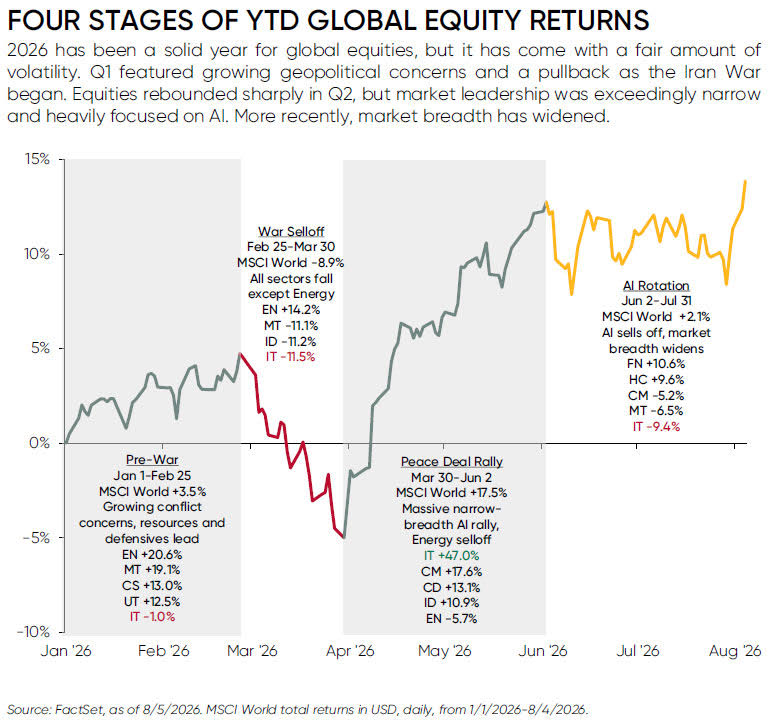
She Saw the Flock Story Coming…

Note: This guest essay was written by someone who works for a regulated entity and is not authorized to speak publicly on corporate or market issues. They have been closely following the evolution of the mass surveillance situation since early 2025. 


Why Jessica Burbank’s Flock investigation deserved consideration for an Investigative Documentary Emmy

There are two ways for an investigative journalist to be first. One is to publish a story before another reporter does. The rarer kind is to recognize that something is an important story before everyone else sees its importance.

Jessica Burbank did the latter.

In August 2025, Burbank produced an hour-long documentary investigating Flock Safety, the rapidly expanding provider of automated license-plate readers and other surveillance technology. Her starting point was hardly the stuff of national headlines: a municipal contract in the affluent village of Scarsdale, New York.

What Burbank found there became a window into something much larger.

That matters because the National Academy of Television Arts & Sciences has an Emmy category almost tailor-made for this kind of work. NATAS describes Outstanding Investigative Documentary as films that expose “wrongdoing, corruption or hidden truths through deep reporting and original access.”

In other words, work that holds powerful institutions accountable and brings new evidence or revelations to light. Measured against that standard, Burbank deserved serious consideration for an Emmy.

On April 8, 2025, Scarsdale’s Village Board approved its Flock contract. The resolution had not appeared on the published agenda. After a presentation and executive session, the Board amended its agenda and approved the contract 6–1. The procedural portion took mere seconds.

Burbank’s documentary reconstructs what preceded that vote and what residents hadn’t been told.

Using records obtained under New York’s Freedom of Information Law, she established that Village officials had been communicating with Flock for months before the public presentation. The incoming police chief was invited to meet with the company the day after his selection and before formally taking office. On March 31, he emailed that “the map is approved,” referring to proposed camera locations—before the public presentation, contract approval, or funding.

That alone is solid accountability journalism.

But Burbank didn’t stop there.

A records request seeking market research and analysis of competing vendors produced only a sole-source justification signed by Flock’s CEO. Burbank searched elsewhere and found versions of similar Flock documents in government records around the country. She then identified communities where Flock contracts had followed strikingly similar low-visibility paths.

In Lucas County, Ohio, commissioners approved a $250,000 Flock agreement among a group of routine items, only to attempt to rescind it a week later after a commissioner reconsidered what they had authorized.

This is the machinery of investigative journalism: find an anomaly, obtain the records, test the official explanation, search for a pattern, and confront the subject with what you find.

Burbank did that last part, too. She interviewed Flock’s national communications director and questioned the company about its contracting practices and the similarities she had uncovered among municipalities. The film does not simply present critics of Flock; it puts Burbank’s findings directly to Flock and gives the company an opportunity to answer them.

Then the investigation makes its most important leap.

Scarsdale isn’t really the story. The network is.

The documentary explains that Flock’s distinguishing feature isn’t simply its cameras. It is the ability, where agencies participate in sharing, to connect searches across jurisdictions. Burbank examines a Texas sheriff’s investigation involving a woman who traveled across state lines for an abortion and gets Flock itself to acknowledge that searching cameras in other participating localities is a capability of its system.

From there emerges the film’s central insight: a national surveillance infrastructure doesn’t necessarily arise from an act of Congress or a presidential directive. It can emerge incrementally—one police department, one salesperson, one municipal contract and sometimes one barely noticed local vote at a time.

As Burbank puts it near the film’s conclusion, one might imagine that creation of a national camera network would require “high-profile debate on the nightly news” and congressional action. Instead, she observes, it can take little more than seconds at a town-board meeting and a police chief’s signature.

That observation looks considerably more important today than it did when Burbank made it.

There was also unusually immediate evidence of impact. Her written investigation was published August 2, 2025. On August 4, Scarsdale’s police chief sent the Village Board a memorandum concerning the Flock contract. On August 6, the Village canceled it. Burbank carefully stops short of claiming that her reporting caused the reversal, suggesting instead that journalism and sustained public participation “might” have mattered.

That restraint is important. Investigative journalism should establish what the evidence supports, not claim credit it cannot prove.

But the strongest argument for Burbank’s work may be one that only became fully visible afterward. She was early. The national controversy she identified in 2025 did not fade. It grew.

Flock and interconnected ALPR networks subsequently became subjects of far broader scrutiny over privacy, immigration enforcement, abortion investigations, police misuse and the extraordinary power created when thousands of local cameras become searchable beyond the communities that purchased them.

In other words, Burbank didn’t simply get to the Flock story early. She identified why it was going to become a national story. That distinction matters.

There are investigations that expose misconduct everyone already understands to be important. They can be extraordinary journalism. But there is another, rarer form of investigative reporting: finding something that appears small, recognizing the system concealed inside it and showing the audience why it will matter before conventional wisdom catches up.

Burbank began with a 37-second vote in a suburban village and found the architecture of a national controversy.

Her documentary ends with a sentence that now sounds remarkably prescient:

“The story of mass surveillance and Flock Safety is one I’m just beginning to tell.”

She was right.

None of this means Burbank was owed an Emmy. NATAS’s documentary categories encompass extraordinary work from some of the best-resourced documentary organizations in the world, and an independent production should be judged by the same standard of excellence.

But that is precisely why Burbank’s accomplishment deserves attention. NATAS says an Outstanding Investigative Documentary should uncover hidden truths through deep reporting and original access, hold powerful actors accountable, and bring new evidence or revelations to light.

Burbank did those things.

And she did one more: she recognized the significance of the story before much of the country did. That isn’t merely good timing. It’s one of the hallmarks of great investigative journalism.


Sources:
Video: You’re Being Watched: The Company Behind America’s Mass Surveillance Takeover

Millions in Public Funds, Zero Public Input: Flock’s Surveillance System Might Already Be Overseeing Your Community
The $7.5 billion surveillance company Flock Safety is operating in 49 states and over 5,000 communities, but the residents of Scarsdale, NY, are fighting back.
Jessica Burbank
Dropsite. Aug 02, 2025


The post She Saw the Flock Story Coming… appeared first on The Big Picture.
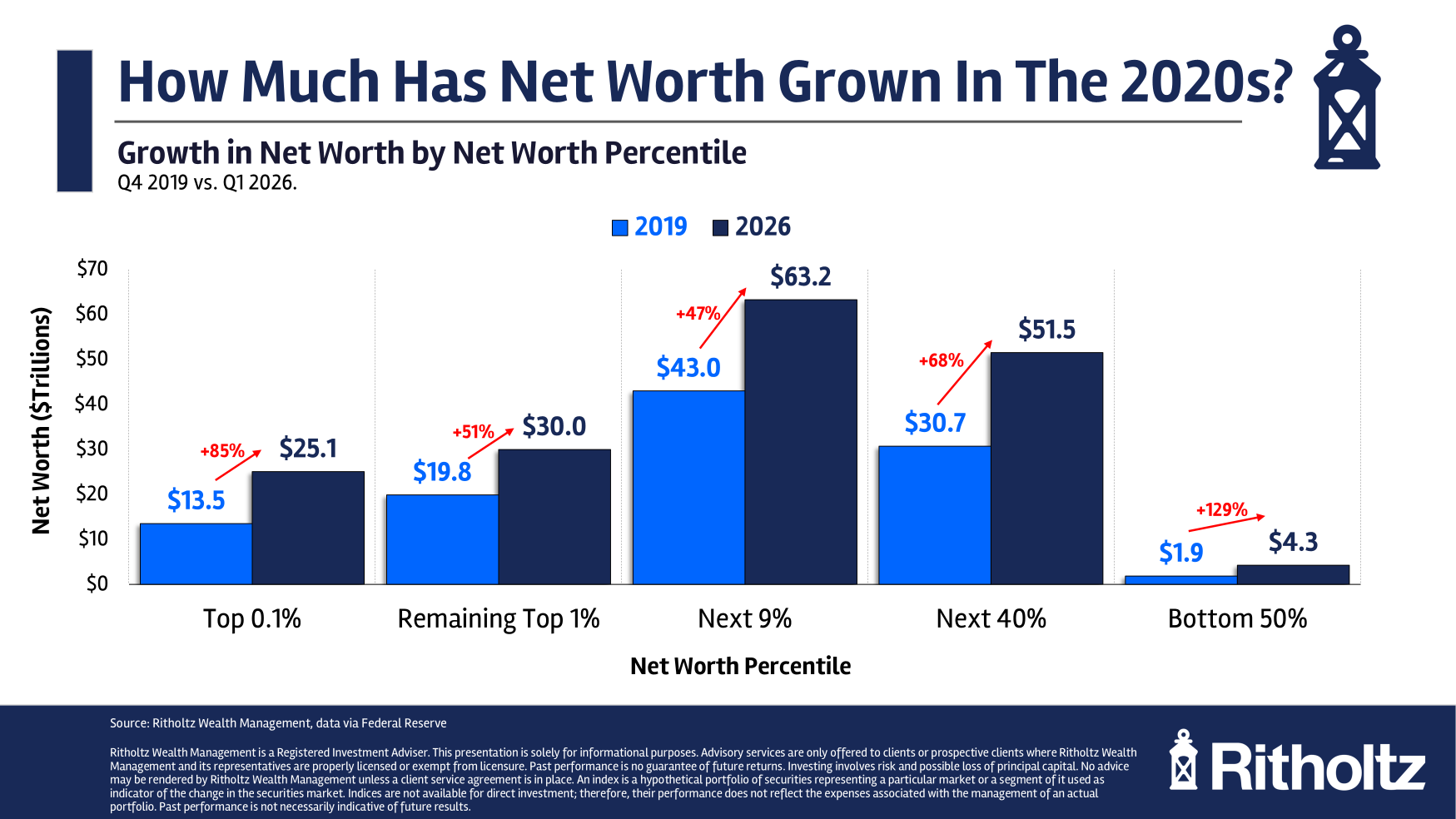
10 Friday AM Reads

My back in NY morning reads:

​• Why Are Valuations Falling in a Bull Market?: Ben Carlson runs the year’s tape — mortgages from 6% to 7%, the 10-year from 4% to 5%, inflation from 2.4% to 3.4%, oil from under $60 to over $100. (A Wealth of Common Sense)

​​• Muni Bonds Are Yielding 5%. They Rival Stocks Now.: With yields comparable to long-term Treasuries and strong credit quality across the $4 trillion tax-exempt market, a tax-advantaged 5% could stack up well versus equities in the coming years. (Barron’s) see also T-Bills and Chill? Try Munis & Chill Instead. Land an A-round and a real salary? Great! Start putting some of your newfound cash flow aside as a good savings habit in an all-equity 401(k). It is a hedge against your start-up failing to beat the odds and eventually finding an exit. (The Big Picture)

• The Next Great AI Trade Is Everything That Isn’t AI: Market Sentiment on the hard half of investing — finding the trend early is easy compared to knowing when the thesis has become consensus. (Market Sentiment)

​• The iShares Graveyard: David Snowball’s archaeological dig through BlackRock’s full list of liquidated ETFs, prompted by eight more closures. “You think I went down a rabbit hole. I prefer to consider it an archaeological dig.” (Mutual Fund Observer)

Trump Has Made More Trades Than All of Congress Combined: Bloomberg finds the president has traded more securities than every member of Congress combined since returning to office — while backing a lawmaker stock-trading ban that doesn’t apply to him.  Most Americans support a ban on lawmaker stock trading. Trump is in favor of a prohibition that doesn’t apply to him. (Bloomberg free)

​• The World Economy Is Becoming Wary of the U.S.: Global investors balking at Treasuries, louder talk of the dollar’s dwindling power, foreign governments hauling their gold out of American vaults. America’s position of global economic stability is starting to look shakier as the Trump administration piles on debt and doubles down on sanctions. (New York Timessee also The American Age Is Over: The Atlantic on the post-WWII order — bound to end eventually, shocking in how suddenly the moment arrived. A period of global dominance has ended in plain sight. (The Atlantic)

​• We Bought a $500 Counterfeit Luxury Watch. Nobody Could Spot the Difference: Alistair Charlton inside the Reddit QC-post subculture of superfake Rolexes — so good even Rolex didn’t spot it. The replica watch industry is in its “super clone” era. Following tips from murky internet forums, we bought three budget fakes that were good enough to pass as real—but ultimately disposable. (Wired)

‘Flock City PD:’ The Fake Flock-Owned ‘Police Department’ That Searched Real Cameras for Real People: Jason Koebler Jason Koebler · Sep 17, 2026 at 2:07 PM Flock ran searches for “coexist bumper sticker,” “white truck with a trump sticker,” and “Star of David,” apparently to demonstrate what cops shouldn’t search for. (404)

​• Can We Be Certain That Time Really Exists?: Ethan Siegel on what counts as real — the measurable, observable, and quantifiable — and the questions that hand back pathological nonsense, like dividing by zero. We experience time as real. But what if it’s only an illusion: an illusion that’s inherently relative? Does time fundamentally even exist? (Starts With A Bang)

“Where Am I Going? And What’s Next?”: Nicole Kidman Is Keeping Her Heart Open: The long-awaited sequel to a fan-favourite movie; a newly single life to ponder; the Euro Summer to end them all: has Nicole Kidman ever been more spellbinding? Giles Hattersley meets the legend in London to talk power moves, mega fashion and the art of a fresh start. Photographs by Venetia Scott. Styling by Poppy Kain. (British Vogue)

Video of the day: The Greatest Scam of Our Childhood 8 CDs for a Penny!

Be sure to check out our Masters in Business this weekend with Glen Kacher, founder and CIO of Light Street Capital. He launched the firm in Palo Alto after stints working with Julian Roberts at Tiger and Roger McNamee at Integral. His Mercury funds returned 45.7% in 2023, 59.4% in 2024, and 37.3% in 2025 — the best three-year stretch of any of the “Tiger Cubs.” He describes the firm as “the Silicon Valley Home Team, 100% focused on tech opportunities.”


Home price growth has already begun to cool again

Source: Calculated Risk


Sign up for our reads-only mailing list here.


The post 10 Friday AM Reads appeared first on The Big Picture.
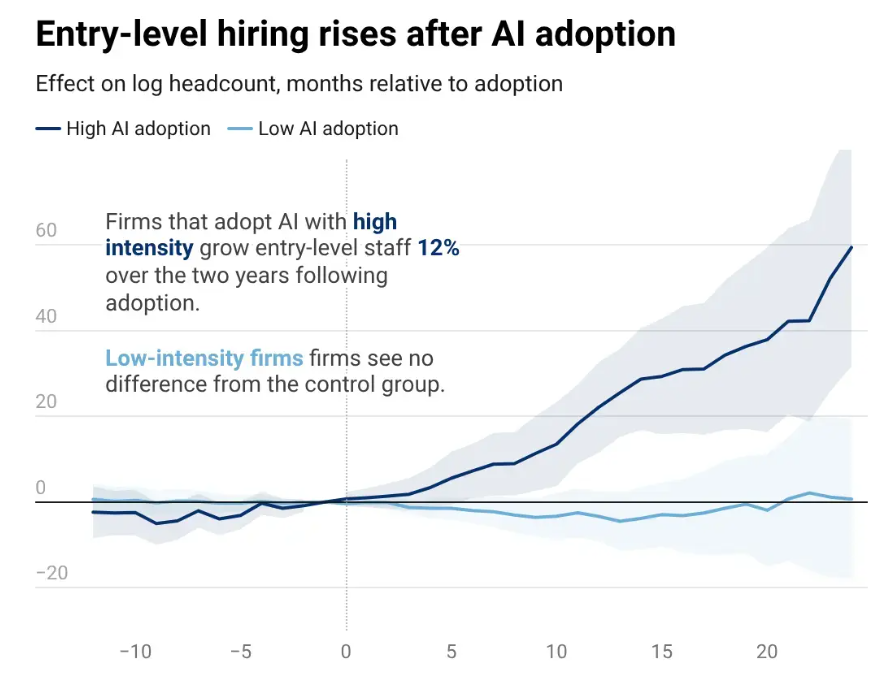
How to Get Rich Slowly


I had a very interesting conversation with Michael Monaghan of Founder’s Fund about HNTI; here is the description:

Barry Ritholtz explains why getting rich through investing is simpler than most people think, why market forecasts are so often wrong, and why your own behavior may be the biggest threat to long-term investment success.

Michael Monaghan sits down with Barry Ritholtz, Chairman and Chief Investment Officer of Ritholtz Wealth Management, host of Masters in Business, and author of How Not to Invest, for a wide-ranging conversation on stock market investing, compounding, index funds, active management, investor psychology, financial media, market predictions, and building wealth over time.

Barry explains why investors should focus on getting rich slowly, why humans are psychologically wired to make poor decisions in volatile markets, and why the most confident market forecasts can often be the least reliable.

They discuss why so few active managers outperform over long periods, what Barry learned from Warren Buffett, Ray Dalio, Howard Marks, and Daniel Kahneman, and why he believes most investors should keep the core of their portfolio simple. Barry also shares his “cowboy account” strategy for investors who still want to pick stocks, including how he thinks about Nvidia and speculative investments without putting long-term wealth at risk.

The conversation also explores what financial advisors actually add beyond investment performance, direct indexing and tax-loss harvesting, and why Barry believes the purpose of money is not simply to accumulate a bigger number.


The post How to Get Rich Slowly appeared first on The Big Picture.

10 Thursday AM Reads

My morning reads:

Here’s Who Trump Should Blame for the Rate Hike He’s Raging About:He promised lower prices and lower interest rates. His policies delivered renewed inflation and a rate hike. (The Bulwark)

Gas Prices Could Cost Republicans the Midterms: Gas is up 37 percent in a year, home-heating oil 52 percent, diesel a staggering 69 percent — and none of it improves while the Iran war drags on. Many voters understand that the president isn’t directly responsible for the price of oil. Except this time, he is. (The Atlantic) 

​• More Money Than They Ever Imagined — and No Clue How to Spend It: Bay Area AI workers are too busy to embrace the fruits of the boom — maybe a custom bike trip through Italy, if they can spare the time off. Share sales at OpenAI and Anthropic minted hundreds of millionaires. They’re splurging on computer hardware and espresso machines. (Wall Street Journal)

Hollywood fears an AI future. China is already living it: China’s film and video industry is in the midst of an AI revolution, and at ground zero are the micro dramas that play out on millions of smartphones. The AI trends upending China’s entertainment industry may be a harbinger for what’s to come in Hollywood. ​Actor Chen Yilong signed a contract in August licensing his face to a production studio — his role now is to sit before a camera making expressions on command. A neutral stare. An angry glare. (Los Angeles Times)

It’s Time to Raise the Rates (No, Not Those Ones). Reaganism broke U.S. tax brackets. It’s time to fix them. I’ve always been struck by the fact that the income floor for the top tax rate in America is $640,600. Why should someone making $700,000 pay the same rate as someone making $70 million? In a new report, the Roosevelt Institute policy fellow Samarth Gupta argues that this is actually a historical anomaly. From 1916 to 1986, the tax code had, on average, more than 27 different federal income brackets each year; today, it has just seven. Fixing that, he argues, wouldn’t just make the tax system fairer; it could also help us pay down the national debt. (The Bully Pulpit with Bharat Ramamurti)

A Severe Misalignment of AI in Mathematics. We are witnessing a general threat to intellectual work, with misalignment between the outcome of the use of AI and its initial purpose. In many fields and activities, years of training have traditionally served not only to produce a final answer or product, but also to develop understanding and the ability to formulate new questions and ideas. Terence Tao on the threat to intellectual work — years of training were never just about producing the final answer, but about developing the ability to formulate new questions. (Terry Tao)

 Pennsylvania’s Measles Outbreak Is Enormous: The two latest deaths suggest that the true number of infections is much larger than reported. Four deaths in the state since mid-August have made America’s measles crisis undeniable — and harder for anti-vaccine activists to explain away. (The Atlantic)

Kennedy Center Leaders Warn It’ll Collapse Without Trump’s Name: Hafiz Rashid on the president’s allies claiming the historic theater could close immediately unless the renaming sticks. (New Republic)

​• Shot Into the Sky at 700 MPH: Inside the Secret Fraternity of Ejection Survivors: Ron Bath hit a bird at nearly 700 mph in his RF-4 Phantom — the WSJ on the tie club whose membership requirement is pulling the handle. People who live through the harrowing experience join a little-known fraternity where members get silk ties and $5,000 watches (Wall Street Journal)

 ‘It’s the Bayeux tapestry of TV!’ After six decades, the seminal series bows out with 70 Up. The ‘hugely important artefact’ that’s followed 14 children since they were seven is set to air its final instalment. The now-septuagenarians and director Asif Kapadia talk about breaking new ground for 63 years – and changing TV for ever. The Up series — checking in on the same Britons every seven years since 1964 — comes to its close. (The Guardian)

Video of the day: The Professor Who Taught People How To Think

Be sure to check out our Masters in Business next week with Glen Kacher, founder and CIO of Light Street Capital. He launched the firm in Palo Alto after stints working with Julian Roberts at Tiger and Roger McNamee at Integral. His Mercury funds returned 45.7% in 2023, 59.4% in 2024, and 37.3% in 2025 — the best three-year stretch of any of the “Tiger Cubs.” He describes the firm as “the Silicon Valley Home Team, 100% focused on tech opportunities.”


Four Stages of YTD Global Equity Returns

Source: Fisher Investments

Sign up for our reads-only mailing list here.


The post 10 Thursday AM Reads appeared first on The Big Picture.

At The Money: Investing in Founder-Led Companies


At The Money: At The Money: Investing in Founder-Led Companies Michael Monahan (September 16, 2026)

How can ordinary investors access funds of companies led by founders? Enter the Founders 100 ETF (FFF).

Full transcript below.

~~~

About this week’s guest:

Michael Monahan is a partner and portfolio manager of the Founders 100 ETF (FFF). He’s been a Wall Street analyst, a private market investor, a tech startup CEO, and a public equity portfolio manager.

For more info, see:

Personal Bio

Professional/Personal website

LinkedIn

~~~


Find all of the previous At the Money episodes here, and in the MiB feed on Apple PodcastsYouTubeSpotify, and Bloomberg. And find the entire musical playlist of all the songs I have used on At the Money on Spotify


Transcript: At the Money: Michael Monaghan


BARRY RITHOLTZ: Should you invest in companies led by founders? Peter Thiel’s VC Founders Fund has over $20 billion and produced excellent returns. How can ordinary investors get access to funds of companies headed by founders? To help us unpack all of this and what it might mean for your portfolio, let’s bring in Michael Monaghan. He is a partner and portfolio manager of the Founders 100 ETF, stock symbol FFF. He’s also been a Wall Street analyst, a private market investor, a tech startup CEO, and a public equity portfolio manager in his career. So, Michael, let’s just start with the basics. What’s the central thesis behind the Founders 100 ETF? Why should founder-led companies outperform even after they’ve become large public companies?

MICHAEL MONAGHAN: Barry, thanks for having me. The data shows that founders outperform by about 3X. We looked at 11,000 stocks over 30 years, and on average, founder-led companies grow 4% greater than the S&P.

BARRY RITHOLTZ: Wow. So let’s stay focused on that 3X. I believe that was Bain research, that founder-led companies tend to outperform other companies. What is it that drives that three times outperformance? Is it that founder-led companies tend to be heavily represented in the technology sector? Is it a function of age or size, or is this just survivorship bias?

MICHAEL MONAGHAN: We’ve got companies led by founders all across the economy, so it’s not just a concentration in technology, although there are a lot of technology companies that are led by founders. We don’t think it’s survivorship bias. We think that founders bring something really unique. They have the vision to see where to go. They have the execution to execute that plan they’ve envisioned. They have the charisma to build a big team around them, and they’ve got the grit to get through the hard times, combined with the fact that they think in decades, where a board-hired CEO is just trying to make the next quarter and the next PowerPoint presentation for the board.

BARRY RITHOLTZ: How much of this is due to the fact that, hey, if you’re going to start a new company from scratch, by definition you’re a risk-taker. How much of the outperformance of founder-led companies is simply just embracing that higher tolerance for risk?

MICHAEL MONAGHAN: I don’t know if that’s the factor that’s showing it. I think if you dig in, a lot of these guys are successful because they de-risk all along the path, right? So if you listen to, say, a Marc Andreessen, he talks about at the zero stage and the one stage and the two stage, it’s all about de-risking the problem as you move along. So I would gently say that I think founders de-risk their business even more than non-founders.

BARRY RITHOLTZ: Really interesting. And you yourself are a founder. Your startup was Beartooth Radio. It didn’t necessarily find an exit, but I’m curious, how did that experience of standing up a company from scratch affect your view of founder-led firms?

MICHAEL MONAGHAN: I think it completely reframed how I think about building a company. I had spent the first 15 years of my life working for great companies. I worked at Goldman Sachs, I worked at Sanford Bernstein. But there’s a big difference between working at a world-class organization where you fit into their system, and building your own system from zero to one. I was fortunate enough to get exposure to some of these really good technology founders, and just saw how differently they thought, how passionate they were, how they brought vision that corporate managers didn’t have.

BARRY RITHOLTZ: So let’s zoom in on that. How do you define a founder? Must the individual have actually started the original enterprise, or do you include anyone who perhaps acquired or reinvented or merged with or effectively refounded an already existing company?

MICHAEL MONAGHAN: So we define founder-led as the original founder — that’s the person who started the company — still running it, most often as the chief executive officer. Occasionally it’ll be the chief technology officer, or in the case of a medical or scientific company, it could be the chief medical or chief scientific officer. So it’s the chief officer running the company day-to-day. We looked at the data. Board member doesn’t have the efficacy we want. Chairman doesn’t have the efficacy. It’s only if the founder’s sitting in the seat every day running the company.

BARRY RITHOLTZ: And some classifications are really straightforward. Obviously Michael Dell founded Dell Computers, Zuckerberg at Facebook. What do you do with the more ambiguous cases? And I think probably the biggest one is Elon Musk, who was an investor, not an original founder of Tesla. There are debates about the merger with PayPal. We could talk about SpaceX. How do you draw the lines there? You’re really less interested in the technical founding issue than the driving animus of the company. Is that a good way to distinguish it?

MICHAEL MONAGHAN: I think that’s fair. We have a rigorous process to decide, and you and I can hit a couple of edge cases. But we look to see who the original founder is. Most of the time it’s clear-cut. Sometimes it’s not, and then we have to dig in. We have to say, who does the company define as the founder? Elon’s a great one to examine, because for some reason there’s controversy as to whether he’s the actual founder. We dug in and did the hard work. The company defines him as the founder, and in fact it was either 2012 or 2014, there was a court case where this was actually settled, and Elon Musk is one of the five original founders of the Tesla Motor Company.

BARRY RITHOLTZ: I would modify that to say Elon wasn’t the original founder, but once he took over, he so totally revamped the company that it looks nothing like the prior enterprise. So is there any reason to split hairs with that? But same sort of thing with PayPal or SpaceX. How do you think about those two?

MICHAEL MONAGHAN: So I think SpaceX, he clearly was the founder. I don’t think anyone else lays claim to it, right? PayPal was the merger of a couple of entities. It was the original X entity that Elon was building merged into Peter Thiel’s company. But there are edge cases. Berkshire Hathaway is a great example. I don’t think anyone would doubt that Mr. Buffett was the founder of Berkshire, but he bought a failing textile company as part of a massive acquisition, and that company that acquired that and many other things — he’s the founder of. And Monster Beverage is kind of the same way. They acquired a juice company, but it was really the energy drink company and the other acquisitions they made that is the founding of the Monster Beverage company.

BARRY RITHOLTZ: Yeah, that makes a whole lot of sense. So amongst your current holdings, you have founders like Alex Karp of Palantir, Larry Fink at BlackRock, Marc Rowan at Apollo. Each of those companies had multiple co-founders. How relevant must the individual who remains be to the company, to its strategic vision — to really be its dominant force?

MICHAEL MONAGHAN: You know, our test is: were they an original co-founder? And we often look to the company to define it. Most of the companies in their origin story or their history will list who the original co-founders are. As long as at least one remains as an executive, that meets our test.

BARRY RITHOLTZ: So now we take the list of however many founder-led companies there are — I think it was 11,000. You’re going to break that down to a list of 100. What are the underlying criteria that determine which of those thousands and thousands of founder-led companies end up in the 100 that are in FFF?

MICHAEL MONAGHAN: Really great question. So we looked at 11,000 stocks over 30 years, and during that 30-year time period, there are about 800 founder-led stocks at any one time. So in the current market, there are about 800 founder-led stocks. From there, we look at the 200 largest by market capitalization. And then my co-founder and I come from a fundamental background, especially her. She’s a classically trained Columbia Business School value investor. We build a valuation model, using some factors, to pick what we then believe are the 100 best out of the 200 largest.

BARRY RITHOLTZ: Interesting. And I’m looking at your largest holdings: Meta, Nvidia, Oracle, Palantir, Dell, Arista, and CrowdStrike. A lot of this is a heavy overlap with technology, AI, high growth, big cap companies. Why go with a founders fund instead of just a simple Nasdaq 100?

MICHAEL MONAGHAN: We have very different exposures than the Nasdaq 100. We’ve got about 80% active share versus the Nasdaq 100. We’ve got much higher exposure to founders — 100% founders versus about 20% of the Nasdaq 100 — and it’s a different portfolio construction. The Nasdaq 100 is limited to only Nasdaq stocks, and there’s obviously incredibly high growth in tech and out-of-tech stocks on the NYSE. And we feel like we’ve got a little better spread across the economy. Right now, the Nasdaq 100 is 30% exposed to semiconductors, the S&P at 20, and we’re only at 10. So we do have exposure to technology, but we really are bent across the entire curve. We’re not substantially overweight versus, say, the S&P. We are slightly overweight, but I don’t think we’re massively overweight versus the S&P.

BARRY RITHOLTZ: Yeah, I was looking through your holdings and I saw a lot of industrials and energy and financials, which you don’t necessarily see in the Nasdaq 100. But I’m glad you mentioned the 80% active share. So many ETFs I look at end up being closet indexers. This is really a very concentrated portfolio, with the top 10 holdings really accounting for a big chunk of your exposure. How much of what drives the performance of this is really just a conviction strategy — a concentrated portfolio with a long tail of sub-1% holdings? Tell us about the concentration, and also tell us, why do you have the rest of these small holdings? They’re almost like placekeepers to keep an eye on.

MICHAEL MONAGHAN: So we run a modified market cap weighting. That is, we take the market cap and we allow that to define how much position size we’re going to take for each position. The reason we modify it is we put a hard cap of 7.5%. So we rebalance quarterly — every quarter we reset the portfolio. We don’t take any single position more than 7.5%, because we want to have some diversification in the portfolio. That’s where we come up with the weightings. And the reason we end up with some of these smaller weights at the bottom, it’s just defined by where they are on a free float market cap.

What I would tell you, Barry, it’s really interesting. There’ll be days I wake up, I look at our portfolio, our top holdings are down, and the portfolio’s actually up, because those other 75 to 80 stocks that make up the balance — 50% — they drive sometimes when the big guys aren’t working. So it’s sort of just — we allow the market capitalization to set our position sizes.

BARRY RITHOLTZ: All right, so now we know the criteria for selection, the criteria for weighting. Let’s talk about the most challenging aspect of managing a portfolio: the sell discipline. What leads you to taking a company out of the portfolio? Is it just something as simple as the founder leaving, or do you also run through operating parameters and other fundamentals? And when suddenly you’re starting to think, “Hey, this company doesn’t have the growth prospects we were hoping for,” is that a basis for ejecting them, or is it a variety of things?

MICHAEL MONAGHAN: The main reason we would sell a stock is if the founder leaves. So in the prospectus, we state that if a founder announces their resignation, we will sell within 90 days of that announcement. So we don’t wait for them to actually leave — we would sell on the announcement. The second way a stock would get sold is if the fundamental overlay flags a condition that says to sell the stock. One of the ways we like to describe the fundamental overlay — it was built by my partner — it’s really looking for what she calls burnt pizza crust. We think all of our founders can make great pizza. We don’t want to tell them whether to make pepperoni or margherita. The factor looks and it says, are one of these crusts getting burnt? And if so, we’ll slide it out and bring in the next best company.

BARRY RITHOLTZ: Really interesting. So to wrap up: if you’re interested in a venture fund like Peter Thiel’s Founders Fund, but you don’t have a quarter billion dollars to gain access to it, consider the Founders 100 ETF, stock symbol FFF. Be aware of the fact that this is a concentrated portfolio with a high active share, and it may not perform similarly to the S&P 500 or the Nasdaq, but it is concentrated, and it focuses on companies being led by the original founders.

I’m Barry Ritholtz. You’re listening to Bloomberg’s At the Money.

~~~

Find our entire music playlist for At the Money on Spotify.


The post At The Money: Investing in Founder-Led Companies appeared first on The Big Picture.

10 Wednesday AM Reads

My mid-week morning reads:

​• Costly Medicine: Claudia Sahm on Fed Week — the FOMC is highly likely to hike a quarter point Wednesday, and the Middle East and AI headlines stealing attention are the same stories driving the inflation risk. (Claudia Sahm)

The Unlikely Political Bedfellows on A.I. Regulation: David Sacks and Lina Khan? Bernie Sanders and Steve Bannon? The debate on artificial intelligence limits is creating unlikely alliances. (Dealbook) see also Here’s why it’s so hard to keep AI agents from going rogue: The techniques that made chatbots more capable can also bake in a tendency to hack, cheat and evade human oversight. Gerrit De Vynck on the gap between January’s optimism — alignment “increasingly looks solvable” — and what the technology is learning about cheating and hacking. (Washington Post)

​• Americans Don’t Understand Who’s Rich: Terry Taylor is worth about $2 billion, doesn’t put his name on the car dealerships he buys, and attends conferences only if nobody announces who he is. The Atlantic on the invisible rich and the tax code built around not seeing them. (The Atlantic)

Stocks pop when the Trump administration invests, but the gains often fade fast: Stocks in other companies that have struck a deal with the Trump administration have tended to move in the opposite direction, often following a common trajectory: a significant bump around the formal announcement, high volatility afterward, and then gains often given back almost as quickly as they came. (Yahoo)

American Businesses Have No Idea How to Set Prices Right Now: Diesel crosses $6 a gallon for the first time, and firms can’t tell whether to raise prices or wait it out. Businesses of all stripes are struggling to predict how long high energy costs will last.  (Wall Street Journal)

Catastrophe Bond Fund Landscape: These products promise higher returns by assuming the risk of catastrophic events. The trade-offs are capacity constraints, limited liquidity, and higher fees. (Morningstar)

​• Oil Executives Say the Great Fuel Crisis Is Here: Chevron’s Mike Wirth and others warn global supplies are running low with no respite in sight — while Trump officials insist the disruption is temporary. (Wall Street Journalsee also Rising Fuel Prices Set Off Anger and Protests Around the World: From Indonesia to Guatemala to Syria, shortages are producing protests and blackouts. (New York Times)

The U.S. Was Never Going to Win the “War on Terror” Robin Wright on twenty-five years of military campaigns against extremism, almost a million deaths — and the question of what it accomplished. In the twenty-five years since 9/11, the U.S. has waged several military campaigns against extremism around the world, resulting in the deaths of almost a million people. What has it accomplished? (New Yorker)

​• For the Love of God, Please Put on Headphones: “Loudcasting” — using speakerphone to watch videos and take phone calls — is turning public spaces into open-air podcasts. A writer begs for silence.   (Wall Street Journal).

​• 50 Parting Thoughts From the 2026 U.S. Open: Elena Rybakina and Alexander Zverev took home the hardware, while influencers and high ticket prices dominated the conversation at Flushing Meadows. (Sports Illustrated)

Video of the day: Japan’s Toyota Blows Up The Entire Car Market With This BIG announcement

Be sure to check out our Masters in Business with Seth Bernstein, CEO of AllianceBernstein and Head of Asset Management of Equitable Holdings, the 69% owner AB. The firm manages $905.5B. Previously, he spent 32 years at JPMorgan Chase, where he eventually became the Global Head of Managed Solutions & Strategy at JPAM, responsible for all discretionary assets for Private Banking clients, and Global Head of Fixed Income & Currency. He eventually became CFO of JPM’s Investment Management & Private Banking division.


Millionaires Everywhere

Source: A Wealth of Common Sense


Sign up for our reads-only mailing list here.

The post 10 Wednesday AM Reads appeared first on The Big Picture.

Transcript: Seth Bernstein, Chief Executive Officer of AllianceBernstein


The transcript from this week’s, MiB: Seth Bernstein, Chief Executive Officer of AllianceBernstein, is below.

You can stream and download our full conversation, including any podcast extras, on Apple Podcasts, Spotify, YouTube (video), YouTube (audio), and Bloomberg. All of our earlier podcasts on your favorite pod hosts can be found here.

~~~

MASTERS IN BUSINESS Seth Bernstein, CEO, AllianceBernstein
Bloomberg Radio  |  Host: Barry Ritholtz

00:00:07  BARRY RITHOLTZ: This week on the podcast, we have an extra special guest. Seth Bernstein is the CEO of AllianceBernstein, as well as Head of Asset Management for Equitable Holdings. The firm manages $905-plus billion in client assets. He’s been CEO since 2017, joining the firm after 32 years at JPMorgan Chase and its predecessors. I thought this conversation was really fascinating, and I think you will too. If you’re interested in how a firm adapts to changing conditions, you’re going to find this to be a really fascinating discussion. With no further ado, my discussion with AllianceBernstein’s CEO, Seth Bernstein.

00:01:00  BARRY RITHOLTZ: Seth Bernstein, welcome to Bloomberg.

00:01:01  SETH BERNSTEIN: Barry, thank you very much. I’m delighted to be here.

00:01:04  BARRY RITHOLTZ: I’m delighted to have you. So before we start talking about AB, let’s delve a little bit into your background. You studied political science and economics at Haverford. What was the original career plan? Was it always investment management?

00:01:19  SETH BERNSTEIN: No, I had no idea what investment management was. I didn’t have anyone in my family who was in the financial services business. The original plan was for me to be an architect.

00:01:28  BARRY RITHOLTZ: Oh, really?

00:01:29  SETH BERNSTEIN: But I came up against two sort of immovable objects. One, I wasn’t terribly talented, and two, I didn’t have enough dough. So I discovered that no one makes money in architecture.

00:01:41  BARRY RITHOLTZ: Is that true?

00:01:41  SETH BERNSTEIN: No, I’m sure someone does, but not many do.

00:01:44  BARRY RITHOLTZ: Fat head, long tail. That seems to be the winner-take-all story everywhere. All right, so you come out of Haverford, ’84, somewhere around there?

00:01:52  SETH BERNSTEIN: ’84.

00:01:52  BARRY RITHOLTZ: And your first gig was at JPMorgan Chase?

00:01:56  SETH BERNSTEIN: Morgan Guaranty Trust Company.

00:01:57  BARRY RITHOLTZ: Morgan Guaranty. How long were you there for?

00:02:00  SETH BERNSTEIN: Well, Morgan ultimately was sold to Chase.

00:02:04  BARRY RITHOLTZ: So I said this wrong, and I actually had a note to myself. Your first gig after college was at JPMorgan Chase, or one of its 1980s predecessors?

00:02:16  SETH BERNSTEIN: That’s correct.

00:02:17  BARRY RITHOLTZ: Okay, I do my homework, and I literally had to put that into a parenthesis and I forgot to say it. So 1984, you start at a predecessor firm to JPMorgan Chase. Tell us about Morgan Guaranty. What were you doing there?

00:02:32  SETH BERNSTEIN: I was lucky enough to get into a year-long training program where this firm, irrationally, was willing to train liberal arts majors like me in accounting, in corporate finance, and, you know, higher-level math topics and other areas in order to build bankers and traders. That was the goal.

00:02:59  BARRY RITHOLTZ: So I understand poli sci as liberal arts, but did the economics major help at all?

00:03:05  SETH BERNSTEIN: I went to a Quaker college.

00:03:07  BARRY RITHOLTZ: So, no. All right. So you’re at Morgan Guaranty. Tell us a little bit about the roll-up process and where that ended. How did you end up —

00:03:17  SETH BERNSTEIN: Still employed?

00:03:18  BARRY RITHOLTZ: — at JPMorgan Chase? The reason I ask this is, around the same time I got married, and our bank accounts are at JPMorgan Chase, but that’s not where it started. It’s like nine banks ago, and we never changed banks. They would just send — oh, all right, Manufacturers Hanover is now Dime, is now this, is now that. And eventually it became Chase.

00:03:40  SETH BERNSTEIN: We were at the end of that merger trail, basically. JPMorgan had been an independent entity until 1958 or ’59, when they merged with the Guaranty Trust Company, and that was Morgan Guaranty. The holding company was J.P. Morgan and Company, a wonderful bank. They valued people. They almost never went outside to recruit anybody. So it was a fantastic place to have a career, because whenever they’d go into a new business — whether it was bond underwriting, because they were prohibited under Glass-Steagall — they would essentially retrain people who were already there. So you got opportunities that weren’t necessarily available elsewhere.

00:04:23  BARRY RITHOLTZ: Promote from within. Not a bad strategy.

00:04:25  SETH BERNSTEIN: Promote from within, yeah. It worked for a long time, until it didn’t.

00:04:28  BARRY RITHOLTZ: And Glass-Steagall went away in late ’99, something like that.

00:04:32  SETH BERNSTEIN: Glass-Steagall effectively went — JPMorgan was really the first. They granted powers. JPMorgan got equity powers in 1991 or ’92, and I was moved to equity capital markets, a new group. I went there and then ended up running high yield. And then I was responsible for debt capital markets, loan syndications. And then at the time of the merger, I was in media and telecom, because that’s what you do with people who get bored of doing bond underwriting. You make them bankers, whether they’re good or not.

00:05:09  BARRY RITHOLTZ: You did more than just bond underwriting. You eventually became the global head of fixed income and currency.

00:05:13  SETH BERNSTEIN: So after the merger with Chase, I was kind of thinking about what I wanted to do. JPMorgan Chase thought it was a good idea to keep me around, so they gave me an incentive to stick around. I figured that would be a great opportunity to look around for a year and figure it out. If you’ll recall, markets began to taper off at the beginning of 2000, with the whole fear and the internet, the whole issue around building dark fiber. So the high yield market was going to hell in a handbasket. And so I decided maybe it would be a good idea to move. And one of my friends said, why don’t you come over to investment management and private banking? You’d be a CFO, figure out what to do. And then he said, you should run fixed income. And I looked at him — I’d been in fixed income for most of my career — and I said, but I’ve never managed anyone’s money. And he said, don’t worry, they don’t either. So come on board. And so that’s what I did.

00:06:14  BARRY RITHOLTZ: That’s unbelievable. So you were global head of fixed income and currency for 10 years, but then CFO of investment management and private banking?

00:06:24  SETH BERNSTEIN: That was before that.

00:06:24  BARRY RITHOLTZ: That was prior. So I’m working backwards. Right. So was fixed income and currency the final spot, or was it global head of managed solutions?

00:06:33  SETH BERNSTEIN: Global head of managed solutions. I ultimately was asked to go over and run the multi-asset businesses of both investment management — JPMorgan Asset Management — and the portfolios for the private bank of JPMorgan, which was hard to do, because one was a distributor, one was a manufacturer, and we ultimately split it up because we had to. And I then ran all the discretionary money for the private bank and Chase Wealth Management.

00:07:01  BARRY RITHOLTZ: All right. So from there, 32 years at essentially many, many different jobs, but ultimately in the same organization. You decide, all right, I’ve been doing this for three-plus decades, let’s look around and see what’s out there. What led you to take the top job at AllianceBernstein? And that was 2017, correct?

00:07:26  SETH BERNSTEIN: Well, they asked.

00:07:29  BARRY RITHOLTZ: How did they find you? Obviously, when you take on a position like that, they’re looking at a variety of different applicants. How did they find you?

00:07:41  SETH BERNSTEIN: They found me through a person who worked at AXA. AXA was the ultimate owner, the majority owner, of AllianceBernstein, and it was the owner of Equitable. AllianceBernstein was part of Equitable prior to AXA’s purchasing Equitable in 1990-ish. If you’ll recall, back then, that was right after Drexel collapsed, high yield collapsed, real estate collapsed. Equitable got caught up in that. And so Equitable was acquired by AXA, the French insurer, and they made a lot of money with it. They had bought it at a pretty knockdown price. And by 2017, AXA had decided to go in a different direction. They wanted to get out of the life insurance business. And so they decided that they needed to sell Equitable, and a way to facilitate that sale was to bring AllianceBernstein and Equitable back together. And so they were looking for a new head of AllianceBernstein to do that. And a person I knew from my time at JPMorgan was at AXA, and she introduced me to a number of the senior people there. And the rest is sort of history.

00:08:55  BARRY RITHOLTZ: So you’ve been CEO since 2017. At the time you join, AllianceBernstein has $500 billion. This is significantly higher, coming up on a trillion here. But when you were joining, you’re fighting some pretty substantial headwinds. There was a big investor shift going on, really since the financial crisis, from active to passive. Fee compression was everywhere. Institutional sales trading — I remember when that was 20, 25 cents a share. It went to pennies, and then fractions of a penny. What did you find when you joined the company? Anything surprising? Was it what you were expecting?

00:09:37  SETH BERNSTEIN: No, I don’t think you have any idea.

00:09:39  BARRY RITHOLTZ: Oh, really?

00:09:40  SETH BERNSTEIN: When you go from one company after nearly 33 years into another company — I knew a lot of people. I had been a private wealth client, believe it or not, of Bernstein for, at that time, 15, 16 years. I competed against them in fixed income. I knew a lot of people who worked there, but I had no idea what was going on. What I found was a company that had had a very tough financial crisis — their own investment performance in value and in growth. If you’ll recall, AllianceBernstein is a merger of a growth manager, Alliance, with a value manager in Bernstein. And the stock had soared, and AUM of the combined entity had reached, intra-quarter, almost $900 billion. By 2012, they were $380 billion.

00:10:31  BARRY RITHOLTZ: Wow.

00:10:32  SETH BERNSTEIN: And what was 70% equities, roughly, in 2006 was 30% equities in 2012.

00:10:36  BARRY RITHOLTZ: So bonds kind of held their own, and equities collapsed.

00:10:39  SETH BERNSTEIN: Bond performance was pretty good, but equity performance collapsed. We faced a lot of redemptions. My predecessor did a very good job restructuring it — a guy they had recruited out of Goldman — and he had brought in some new teams, and the firm began to develop some really interesting investment performance in equities, which allowed us to buck the trend and have net flows in active equities, which was an important growth. He also started the firm’s evolution into private credit, which I’ve taken a lot further. And the firm was listing but doing better from a performance perspective, not gaining much assets, and then really began to take off.

00:11:20  BARRY RITHOLTZ: What do you learn after 32 years at an institution that eventually becomes JPMorgan Chase about how great financial institutions are built? What was your takeaway that you brought to AB?

00:11:35  SETH BERNSTEIN: What I think I brought to AB was a different perspective, more global than they had. They were very U.S.-centric, although they had a great Asian business. I think I brought an appreciation of how investment processes worked, and an understanding that you can have the smartest people in the world with the most impressive process deliver appalling returns. It’s serendipitous why it works when it does work. So be careful mucking around in it. I think I brought an understanding that the way they had rebuilt AllianceBernstein was to strip resources from everything but the investment teams, because they had nothing to sell. They did a very good job at it. And I began to focus on distribution, whether it’s in private wealth and institutional, and most importantly in retail. And we decided to go full focus on the insurance business, because we saw that as a really important source of growth, both for our private credit business but also our fixed income business.

00:12:38  BARRY RITHOLTZ: What do you think big institutions get wrong? It sounds like post-GFC, AllianceBernstein, before your predecessor really took the reins, kind of was stumbling. It’s a little bit of hindsight that we know all the things that were going wrong with large active managers, but generally speaking, what is it about big institutions that they sometimes just don’t see these things coming, and stumble into the dark on these issues that clearly you identified as problematic?

00:13:16  SETH BERNSTEIN: Look, I think when the good Lord created business models, asset management was really blessed, right? You have no need for capital, or de minimis need for capital, working capital in the business. Your whole revenue stream is structured on ad valorem pricing. So even when you destroy value and markets go up, you make more money. Kind of a wonderful thing.

00:13:41  BARRY RITHOLTZ: Right? A 10% tailwind never hurts.

00:13:43  SETH BERNSTEIN: Never hurts. And we’ve certainly benefited, as has the industry as a whole, from that consequence. Thirdly, you get to work with some of the most interesting, if weirdest, people in the world.

00:13:55  BARRY RITHOLTZ: Absolutely true.

00:13:56  SETH BERNSTEIN: And frankly, particularly when you have an RIA and you have to be focused on wealth management, you better become a really good fiduciary. Because if you’re not putting your clients’ interests first, you’re going to lose them, because all you have is their confidence in you. Because your business, Barry, is a word-of-mouth business. People don’t come to you — I suspect not — because they’ve heard you on your show. They come to you because you have clients who say, this guy protected us.

00:14:23  BARRY RITHOLTZ: Yeah. There’s an aspect of being a fiduciary that seems so obvious today, but 15 years ago, the fiduciaries were a small minority. And I’ve been saying this for 30 years, and it’s taken me being wrong for decades before the industry caught up.

00:14:43  SETH BERNSTEIN: I’m not sure the industry is there yet.

00:14:45  BARRY RITHOLTZ: You look at the big brokerage firms — at the very least, they’ve all become hybrid RIAs.

00:14:50  SETH BERNSTEIN: That’s fair.

00:14:51  BARRY RITHOLTZ: And the dominant fee structure is no longer transactional commission. It’s pretty much fee-based. But when I discovered this in the 1990s, I thought, oh, this has to change right away. I don’t see how this — and it took literally 25 years before the industry, and the financial crisis certainly helped.

00:15:12  SETH BERNSTEIN: Well, but the industry hasn’t done itself any favors about it either. I mean, while I don’t particularly care for abusive and overly ruled legislation, the changes that they were trying to make with regard to forcing a higher fiduciary orientation was not a bad idea and concept.

00:15:36  BARRY RITHOLTZ: No, it was a great idea.

00:15:37  SETH BERNSTEIN: But the industry fought it pretty much.

00:15:38  BARRY RITHOLTZ: Well, because it meant they couldn’t spin these accounts around.

00:15:41  SETH BERNSTEIN: That’s right.

00:15:42  BARRY RITHOLTZ: And generate much higher fees. I mean, look, either it’s a fiduciary standard or it’s not.

00:15:50  SETH BERNSTEIN: It is not black and white.

00:15:51  BARRY RITHOLTZ: Right? You could play with suitability. You know, I used to say, what does suitable mean? Don’t sell IPOs to grandma. That’s suitability. But that isn’t the same as being legally obligated to put the client’s interest first. And the crazy thing is — and I don’t want to go on a rant on this here, because this is about you, not me — but shouldn’t your relationship with the person handling your finances be more like your doctor, lawyer, accountant, and less like the guy selling you a used Honda or BMW? That just doesn’t make any sense to me.

00:16:28  SETH BERNSTEIN: You see, to me, that’s the key issue that I think the industry’s gotten wrong, because I would dismiss the accountant and the attorney. There is no one you put more trust in than your healthcare advisor. After that, who’s the next?

00:16:42  BARRY RITHOLTZ: You would think it would be the person handling your money.

00:16:45  SETH BERNSTEIN: It’s your future. It’s your kids’ education, right? It’s your charitable intent. Your —

00:16:49  BARRY RITHOLTZ: Retirement.

00:16:50  SETH BERNSTEIN: It’s your retirement. Yeah. I think it’s really important, and I think we ignore that to our detriment.

00:16:56  BARRY RITHOLTZ: Coming up, we continue our conversation with Seth Bernstein, discussing the turnaround at AllianceBernstein since he’s become CEO. I’m Barry Ritholtz. You’re listening to Masters in Business on Bloomberg Radio.

00:17:12  BARRY RITHOLTZ: I’m Barry Ritholtz. You are listening to Masters in Business on Bloomberg Radio. My extra special guest this week is Seth Bernstein. He is the CEO of AllianceBernstein, a firm which is managing over $905 billion and is majority owned by Equitable Holdings. About 31% is publicly traded. Is that approximately right?

00:17:34  SETH BERNSTEIN: Approximately right.

00:17:35  BARRY RITHOLTZ: So let’s talk a little bit about what was going on when you took over, and just how this turnaround came to pass. Persistent outflows, an active management model. A lot of the research department — like so many other research departments — were having difficulty justifying a lot of the expenses. What was the immediate short-term plan? What were your first few months on the job?

00:18:02  SETH BERNSTEIN: Yeah, so let’s talk about it. When you run into trouble before the markets turn, it is a silver lining and a blessing. And the firm had begun to take actions and was very much focused on costs. And by the time I arrived, the firm was looking at the merits of moving its headquarters out of New York, because as the industry commoditized, as active sales were declining broadly, the firm’s leases were coming up, and they really had a soul-searching discussion of, can we afford to continue in New York, or do we have to diversify our bets? By the time I had arrived, no decisions had been made. They briefed me on what was going on. And it seemed pretty clear to me that there was a compelling case to reduce our footprint here in New York and go find a place where we could find really talented people who we wouldn’t have otherwise seen, because they either couldn’t afford to live in New York, or, for example, people who were really tech savvy — were we going to be high enough on the food chain that they’d look for us to hire them here in New York, when you had Google at the time searching for everybody?

00:19:09  BARRY RITHOLTZ: Right. North and south, hoovering everyone up and paying great salaries.

00:19:12  SETH BERNSTEIN: Exactly right. We do pretty well finding investors and keeping them. We know how to manage them. They have very fruitful careers. But outside of that, it’s a more challenging career development issue. And so we looked around. We looked at a number of cities. Our firm is overstocked with former consultants, and so we overanalyzed everything, and we came down to five cities, one of which was Nashville. And we announced later in 2017 that we were going to relocate to Tennessee. And we are now eight years into it.

00:19:48  BARRY RITHOLTZ: A thousand people moved down there, right?

00:19:50  SETH BERNSTEIN: Ultimately, we have 1,100-plus jobs there.

00:19:54  BARRY RITHOLTZ: And so let me guess the other cities you were looking at. Okay?

00:19:57  SETH BERNSTEIN: Are you ready? So it was 15 originally, but I’m only expecting the five.

00:20:01  BARRY RITHOLTZ: I’m going to give you three off the top of my head. Charlotte.

00:20:05  SETH BERNSTEIN: That was one of the five.

00:20:06  BARRY RITHOLTZ: Because there’s so many big banks there. There’s a lot of talent. Chicago?

00:20:09  SETH BERNSTEIN: No.

00:20:10  BARRY RITHOLTZ: Really? A lot of finance talent. Half the price of New York. Tampa?

00:20:15  SETH BERNSTEIN: Nope.

00:20:15  BARRY RITHOLTZ: Really? Okay.

00:20:17  SETH BERNSTEIN: You’re not doing so good.

00:20:18  BARRY RITHOLTZ: All right. I’m one for three. Give me some.

00:20:21  SETH BERNSTEIN: Dallas.

00:20:22  BARRY RITHOLTZ: Okay.

00:20:22  SETH BERNSTEIN: Austin, where we already have a great operation.

00:20:24  BARRY RITHOLTZ: Well, Austin was actually number five in my head, but it didn’t come out. DFA is there. There’s a few other people there.

00:20:29  SETH BERNSTEIN: Schwab’s there.

00:20:31  BARRY RITHOLTZ: They’re still a big presence in San Francisco.

00:20:34  SETH BERNSTEIN: Yeah, but they have a big operation there. And Denver.

00:20:37  BARRY RITHOLTZ: Denver. Oh, that’s really interesting. So the obvious question: why Nashville?

00:20:43  SETH BERNSTEIN: We wanted to be a big fish in a small pond, which we couldn’t have been in Charlotte. I mean, Charlotte’s a very compelling place.

00:20:50  BARRY RITHOLTZ: Or Dallas.

00:20:51  SETH BERNSTEIN: Or definitely not Dallas. Although, what a dynamic economy.

00:20:55  BARRY RITHOLTZ: Tremendous economy. A ton of hedge funds, a ton of finance.

00:20:58  SETH BERNSTEIN: A lot of talent there. A lot of people moving everywhere. Good demographics. Austin.

00:21:03  BARRY RITHOLTZ: And by the way, Dallas is a very livable city.

00:21:06  SETH BERNSTEIN: It is. I agree.

00:21:07  BARRY RITHOLTZ: Houston is just a humid swamp, but it’s located near all of the oil areas.

00:21:16  SETH BERNSTEIN: But a great art scene and really good food.

00:21:18  BARRY RITHOLTZ: Yes. Fantastic food in Houston. Absolutely. Texas is filled with all these really fun things. Dallas is Dallas. I haven’t been to Dallas in a few years. I’m going to be there in the fall. It’s just a delightful city.

00:21:32  SETH BERNSTEIN: Denver. Austin, sorry, I mentioned Austin. But Austin’s tough to get to for our people who are in Asia and in Europe.

00:21:41  BARRY RITHOLTZ: There’s that “nerd bird,” they used to call it, back and forth from Silicon Valley to Austin, decades ago in the nineties, because even then the tech companies were moving back office to cheaper Texas. Cheaper land, cheaper everything.

00:21:56  SETH BERNSTEIN: But it’s no longer back office.

00:21:58  BARRY RITHOLTZ: Well, that’s been the big change. Although post-pandemic, a lot of Wall Street moved to Miami, and then a bunch of them kind of boomeranged back. It’s kind of interesting. We are wildly off topic. Let me bring this back to your first six months at AllianceBernstein.

00:22:18  SETH BERNSTEIN: So we decide to move to Nashville. That was worth roughly $85 million a year to us, recurring.

00:22:24  BARRY RITHOLTZ: Really? Oh my goodness. That’s a massive savings.

00:22:28  SETH BERNSTEIN: It was a huge savings. Part of it was real estate, part of it was people, and it’s worked real well for us.

00:22:35  BARRY RITHOLTZ: Wow. Almost a hundred million dollars a year.

00:22:37  SETH BERNSTEIN: And here’s just another part of it: we didn’t force any of our investors to move, because we’re price takers of that talent. I think now — and I may be wrong — I think we have nearly a hundred investors who have elected to move down there.

00:22:50  BARRY RITHOLTZ: When you say investors —

00:22:52  SETH BERNSTEIN: Money managers.

00:22:53  BARRY RITHOLTZ: — who picked up and left New York, or elsewhere, or wherever.

00:22:57  SETH BERNSTEIN: Correct.

00:22:58  BARRY RITHOLTZ: I mean, don’t get me wrong, Nashville is a spectacular, super fun town.

00:23:02  SETH BERNSTEIN: It’s a great town.

00:23:04  BARRY RITHOLTZ: Just not what you think of when you think of finance.

00:23:06  SETH BERNSTEIN: Well, you know, ironically, it was the financial center for the Upper South for many, many years.

00:23:12  BARRY RITHOLTZ: Oh, really? I had no idea. That’s really interesting. All right. So you have this strategic and financial savings by moving there. What were some of the challenges? What was, oh gee, we didn’t anticipate this happening?

00:23:30  SETH BERNSTEIN: You mean in moving? Look, I think the most notable challenge is it’s a domestically focused city from a private sector employment perspective. It’s the healthcare services capital of the U.S. But guess what? Hard to find international tax accountants locally. People with those kinds of exposures, and people who had more traditional Wall Street-like training, whether from an operations or technology side. What was a delightful surprise is we got over the wall lots of resumes from people in Atlanta, Chicago, New York, Boston, and the West Coast, saying, hey, you know, I’m from there, or my spouse is from there, or I really like the lifestyle, I was there for a bachelorette party. So, but it worked. And so it’s been pretty good for us.

00:24:21  BARRY RITHOLTZ: As for the international tax accountants, do they have to physically be located in Nashville? If we learned anything during the pandemic, hey, if you have a computer and an internet connection, you can pretty much be anywhere.

00:24:34  SETH BERNSTEIN: You know, ultimately I’m a big believer in people working together collaboratively within the office. We recognize we’ve got to be flexible, and we’re never going back to five days a week. But we want people as close as we can around. But yes, we have people all over the country. We do, all over the world. We have functions which operate in multiple locations simultaneously. So of course we can do it, but we wanted critical mass there.

00:25:01  BARRY RITHOLTZ: So let’s stay with that idea of corporate culture — having everybody in the office together when you can. When you arrived at AllianceBernstein, what really struck you about the culture that needed to be preserved? What was like, hey, this is really something?

00:25:17  SETH BERNSTEIN: Deep fiduciary culture. Really, really putting clients first, whether it’s in our private wealth business or our investment teams. I think both Alliance and Bernstein did that beautifully, and I think that continues to thrive. I hope that’s one of the most important things for me about the institution. We had, as you pointed out, a very well regarded sell-side research business, which I decided to see if we could reduce our exposure to, for exactly the reasons you said. It is an accident of history why a buy-side firm had a sell-side research business to start with, but almost everyone cross-subsidizes those businesses — so their equity capital markets business or prime brokerage business. We didn’t have any of those cross-subsidies to provide to them. And so we entered into a joint venture with SocGen, Société Générale, which has proven to be pretty successful, and the quality of the research remains very strong, and they have a much stronger partner with deep markets capabilities that they are really, I think, doing a good job commercializing.

00:26:29  BARRY RITHOLTZ: And all those other banking relationships that make sense to have a research department with. Eventually, do they take over the research group, or is it always going to be a joint venture?

00:26:39  SETH BERNSTEIN: No. Ultimately, it’ll transition to them. And that was always the intention. We were quite clear about it. They were very concerned about the culture and not damaging it. It’s a large French institution, and these were a bunch of Americans and Brits. And so we needed to make sure we took stuff very, very mindfully, step by step. We’re still midway through that period. We have five years from the anniversary. We have an arrangement which we talk about from time to time. But that’s the plan.

00:27:12  BARRY RITHOLTZ: And in 2022, AB buys CarVal, which is a specialist in private market credit and debt issuance. The combined private market platform between Bernstein and CarVal is $91 — almost a hundred billion dollars.

00:27:28  SETH BERNSTEIN: That’s right. It was roughly $35 billion before we bought them, and they were another $16 billion, so call it $50 billion. So we’re nearly double what we were when we acquired them.

00:27:40  BARRY RITHOLTZ: So I’m really curious: how does what’s essentially an equity and fixed income shop like AllianceBernstein go about kicking the tires of an alternatives business? There has to be a ton of challenges there. How do you conceptualize those risks?

00:27:57  SETH BERNSTEIN: Look, I grew up lending. I ran the leveraged finance business at JPMorgan. It’s a business I knew. I’m certainly no current expert on the intricacies of it today. But prior to me arriving, AB had built quite a successful private credit business. When Lehman collapsed, we took a team out of Lehman to build a middle market lending business. They’re with us today, based in Austin, and have been remarkably successful. A private real estate debt business. And we had a natural client base. We have, in addition to Equitable — and now Corebridge, when that merger occurs — we have 60 insurance companies as clients who we manage money for.

00:28:42  BARRY RITHOLTZ: So you guys are uniquely situated to sell into the insurance market. Obviously, having a majority owner that’s an insurer provides one aspect. But given that history, what has it been like looking into that market, which I don’t hear a lot of other large shops being aggressive sellers into, the world of insurance?

00:29:05  SETH BERNSTEIN: Sellers or buyers into the world of insurance?

00:29:07  BARRY RITHOLTZ: Either or both. You are selling your product to them and taking their assets in, as well as the parent company merger — we’ll talk about that merger later. But you’re on — I don’t want to say both sides of the trade — but you’re selling into that marketplace and have a deep understanding of the insurance business.

00:29:29  SETH BERNSTEIN: We’ve been managing insurance money forever. I mean, Alliance was started by a life insurer, effectively. And the skills are very different. The client service model is totally different — highly customized, very relationship dependent. The expertise around subject matters, whether it’s regulatory accounting, whether it’s asset-liability matching, really are critical parts of that sale. We do that very well, and we continue to invest in it. And frankly, it’s the largest pool of institutional capital there is in fixed income. And it’s growing. It’s growing at a pretty rapid rate.

00:30:12  BARRY RITHOLTZ: Yeah. You guys and this other kid named Warren Buffett at Berkshire figured out, hey, there’s a tremendous amount of stable assets that —

00:30:21  SETH BERNSTEIN: What a great funding source.

00:30:23  BARRY RITHOLTZ: Right? I mean, how is it that nobody else really seems to —

00:30:26  SETH BERNSTEIN: Oh, other people have thought about that. Marc Rowan thought about it, and I think he’s done pretty well.

00:30:31  BARRY RITHOLTZ: Apollo.

00:30:32  SETH BERNSTEIN: Apollo’s done very well. KKR has figured that out. Guggenheim figured that out. A lot of firms have figured it out.

00:30:38  BARRY RITHOLTZ: Really interesting.

00:30:40  SETH BERNSTEIN: And Prudential being a good example.

00:30:41  BARRY RITHOLTZ: Well, right, but they started on the insurance side, not on the asset management side. But very fair examples. I have to ask about the ETF business. It was effectively nonexistent when you joined. Is that a fair statement?

00:31:00  SETH BERNSTEIN: That’s correct.

00:31:01  BARRY RITHOLTZ: 31 strategies, $21 billion, pretty rapidly.

00:31:03  SETH BERNSTEIN: All active.

00:31:04  BARRY RITHOLTZ: Actively managed, almost all. Yes. Very, very little in terms of just passive indexing.

00:31:08  SETH BERNSTEIN: Very little. And more importantly, almost all of them are new strategies. So they aren’t cannibalizing existing strategies. It’s not a new wrapper for the vast majority of that.

00:31:18  BARRY RITHOLTZ: So what led you to the ETF business, and how did this ramp up?

00:31:22  SETH BERNSTEIN: I hired an incredibly talented guy named Onur Erzan from McKinsey, who is now president of AllianceBernstein. And he absolutely banged the table, pounded the table, that we’ve got to ramp up our active ETF business. And I think he was right, and we backed it. And it’s been a big story for us here. It’s a growing story for us in Asia, where we really punch above our weight, and we’re excited to see what we can do in Europe.

00:31:49  BARRY RITHOLTZ: Where do you think the ETF business can go for AB? How big can this get?

00:31:56  SETH BERNSTEIN: I’m pretty confident, absent some weird regulatory or legal reason — for example, 401(k) plans have a difficult time owning ETFs; the Department of Labor can change that — but we’re not going to launch another mutual fund in the U.S., really. I think it’ll all be ETFs, unless the asset class doesn’t suit it for the liquidity constituency of it. But I think it will be the vehicle of choice, along with separately managed accounts. I think those will be the two wrappers we really focus on. For an individual who’s a client of yours, if you can deliver most of that in SMA form, he or she is paying a lot less tax, because you can tax-manage it much more effectively. You can avoid wash sales. You can have a less overly diversified portfolio, because remember, you have lots of unintended bets when you have a multi-manager portfolio.

00:32:51  BARRY RITHOLTZ: Right, right. Really interesting. Coming up, we continue our conversation with Seth Bernstein, CEO of AllianceBernstein, discussing the current environment for asset management. I’m Barry Ritholtz. You’re listening to Masters in Business on Bloomberg Radio.

00:33:08  BARRY RITHOLTZ: I’m Barry Ritholtz. You are listening to Masters in Business on Bloomberg Radio. My extra special guest is Seth Bernstein. He is the CEO of AllianceBernstein and Head of Asset Management at Equitable Holdings. AllianceBernstein manages over $900 billion in client assets. I have to ask you a funny question. Many years ago, I worked with a guy who, by dumb coincidence, had the same last name as one of the names on the door of the firm.

00:33:40  SETH BERNSTEIN: Alliance.

00:33:40  BARRY RITHOLTZ: No, no, no. Totally different company, but similar concept to you. And whenever a prospective client would ask, he had this terribly amusing non-answer. Something along the lines of, look, I’m trying to create my own reputation and brand separate from the family wealth, and I just wish you would treat me as an independent — never saying, no, I’m completely unrelated to the family. I called it the non-denial denial. I’m curious, your last name is Bernstein, of AllianceBernstein. Does anyone ever say to you, hey, are you the —

00:34:22  SETH BERNSTEIN: All the time.

00:34:23  BARRY RITHOLTZ: All the time. All the time. Obviously you haven’t been there since —

00:34:27  SETH BERNSTEIN: The more insulting question is, are you the founder? And I said, no, I’d be over a hundred years old.

00:34:35  BARRY RITHOLTZ: Right. When was it founded?

00:34:38  SETH BERNSTEIN: 1967.

00:34:41  BARRY RITHOLTZ: Okay. So when you were done playing with blocks, you didn’t have to go into the office that morning?

00:34:48  SETH BERNSTEIN: No, not that day.

00:34:49  BARRY RITHOLTZ: Not that day. But this legitimately comes up —

00:34:53  SETH BERNSTEIN: Regularly, particularly in the private wealth business. But where it’s really important to make it clear is in Asia, where —

00:35:00  BARRY RITHOLTZ: Because they just assume.

00:35:01  SETH BERNSTEIN: Everyone assumes, because most of their businesses are family oriented. But just so you know, in the final moments of whether I was going to get this job or not, I did offer to change my first name to Alliance to get it.

00:35:14  BARRY RITHOLTZ: That’s really amazing. And the fascinating thing about that is, if there’s any industry that’s a meritocracy, it feels like Wall Street has evolved. You live and die on — forget annual performance — what your numbers were last quarter, last month, last week. It really is performance driven and not necessarily your last name. I had to ask if that came up. That’s really fascinating. So let’s talk a little bit about the current environment. There is a merger that was approved by shareholders of Equitable and Corebridge. I know the deal hasn’t closed, and so you probably can’t really say a whole lot about it, but this is going to create about a hundred billion dollars of Corebridge assets that are going to ultimately end up — I assume — moving over to AB. Does anything change for you guys with the upcoming merger of Equitable and Corebridge?

00:36:19  SETH BERNSTEIN: Other than the assets, I’m not aware of anything changing. And they very much value the identity that AB has. And, you know, we are thrilled by the merger and the opportunities that will bring, but no changes anticipated.

00:36:39  BARRY RITHOLTZ: So let’s talk a little bit about some of the assets that you guys have been growing. Private credit, at least up until this year, has been a house on fire. What do you think about the future of private credit? What’s going on there?

00:36:56  SETH BERNSTEIN: Banks are constrained in their ability to continue to service their clients through loans. They’ve been that way structurally, certainly since the financial crisis, and even before that it was hard to hold these assets on balance sheet. JPMorgan spent an enormous amount of time and money trying to securitize their loan book. In fact, that’s where credit derivatives started. And I worked in the groups that helped formulate that, although I certainly was in no way the father of the engineering around that. But it was critically important to reduce that exposure on most bank balance sheets. I believe that trend continues. Banks are levered players. They’re funded short. They’re not natural holders of long-lived, particularly fixed-rate, assets. Insurers are a much better home for that. And frankly, so are funds, because funds don’t offer true liquidity options for you. There’s no run on a fund. Now, what we’ve seen recently, and one of the reasons private credit has been in the news, is vehicles structured for wealthier clients did have some very limited liquidity options for them. But ultimately, there is no maturity transformation in credit. You got what you got. And frankly, I think there shouldn’t be any liquidity other than the payment of interest and repayment of the debt itself.

00:38:26  BARRY RITHOLTZ: I’m glad you say that, because I frequently have this conversation with peers elsewhere. Which part of “seven-year lockup” did you find confusing? The illiquidity premium exists because it’s illiquid. If you want liquidity, well, here’s a hundred trillion dollars in the public fixed income markets. Have at it. Am I being too harsh, or is that a fair statement?

00:38:51  SETH BERNSTEIN: Look, I think people want to get the stuff sold, and so they try to do what they can. But frankly, I think giving any expectation — and frankly, I think the documents were pretty clear — that liquidity isn’t there. But I think better that we go through this now, before there’s any significant credit deterioration. I mean, clearly there’s some deterioration out there.

00:39:13  BARRY RITHOLTZ: It’s relatively — for anyone who lived through the GFC — pretty modest. This is —

00:39:18  SETH BERNSTEIN: It’s nothing. So the truth of the matter is, while there will be loans that go bad, I think most of these funds will be pretty fine at the end of the day. And ultimately, there’s a role for it to play. But it’s really — our focus is much more institutionally focused rather than —

00:39:34  BARRY RITHOLTZ: Than what we’ve seen in some of the areas in it. And just so people understand, there’s a — depending on the funds — two, three, four percent default expectation built into these models. It’s not like, oh my God, something defaulted. That’s just what happens in the normal cost.

00:39:53  SETH BERNSTEIN: That’s the nature of lending money. Yeah, and that’s absolutely true. Now, we have private credit in our private wealth businesses as well, and I think properly structured, it has a role for you, particularly if you have a tax-advantaged location to put it.

00:40:08  BARRY RITHOLTZ: So let’s talk a little bit about private credit. I think the big issue from earlier this year — and hold aside the specific companies that kind of ran into trouble — but when you look at what’s going on, there’s a wide dispersion of underwriting quality. There’s some variance in how often and how precisely these marks happen in these non-traded things. And then, again, we come back to the redemptions in non-traded vehicles, which always kind of shock me. What does this industry need to do to get past the sort of difficult first half of the year we saw in 2026?

00:40:50  SETH BERNSTEIN: Post numbers which show that maybe there’s a deterioration, but it’s not meaningful yet. Educate clients on what’s going on by providing them more transparency — a sense of clarifying, you know, how many names are on your watch list? How many have gone non-accrual?

00:41:11  BARRY RITHOLTZ: There’s no obligation to do that currently.

00:41:14  SETH BERNSTEIN: There is, and they do it for accounting and reporting reasons. But ultimately, regular, periodic updating of your client probably makes them more comfortable with what’s going on. You should be over-communicating during periods like this.

00:41:27  BARRY RITHOLTZ: That’s really — during periods like this, or always?

00:41:31  SETH BERNSTEIN: Well, I think always, because ultimately they’re trusting that you’re giving them a balanced view of what’s going on.

00:41:37  BARRY RITHOLTZ: And to be fair, the headlines are not about the whole industry. It’s about a small handful of companies that have run into modest issues. Again, we’re not in —

00:41:52  SETH BERNSTEIN: And there’s always been fraud. I mean, that’s what we’ve seen come out from time to time in —

00:41:55  BARRY RITHOLTZ: A couple of places.

00:41:56  SETH BERNSTEIN: Sure, in a couple of places. But the truth of the matter is, there’s been an enormous amount of money that’s focused on this segment. And so I think you’re absolutely right. Structuring, terms and pricing got out of whack. But frankly, it’s a much better time to be investing today, post that event.

00:42:14  BARRY RITHOLTZ: So let’s talk a little bit about where this space is going. For most of my career, private credit has been pretty much all institutional. Over the past few years, we’ve seen a big take-up from the wealth management side — RIAs, et cetera. And then a lot of conversations about this being available for retirement accounts or 401(k)s. Tell us your thoughts. What do you think happens with private credit, and how do we do this the right way so we don’t run into these problems?

00:42:45  SETH BERNSTEIN: I think actually target date funds, 401(k)s generally, might be a perfectly appropriate place for it. Highly predictable needs. You have professional management making those decisions, usually separate from the people managing the money themselves. The sponsors of those 401(k) plans are pretty sophisticated investors in their own right. Private credit, particularly for individuals who need the income that those portfolios will generate, might have a very welcome spot in it. And in fact, we are, we think, leaders in working with other private asset managers in developing vehicles to utilize side by side with your target date funds in order to build highly diversified private credit, private equity, private real estate exposures for the beneficiaries of those plans. To me, that’s an institutional purchase, because there’s someone intermediating that decision.

00:43:57  BARRY RITHOLTZ: So let’s talk about that group. It’s AllianceBernstein, Brookfield, and Carlyle working together. How did this come together, and where do you think this goes?

00:44:08  SETH BERNSTEIN: Well, I think it came together as we were talking to other firms about what we thought. We’ve been a pioneer in the 401(k) business, in building particularly custom glide paths and target dates for big, sophisticated plan sponsors — state plans, corporate plans. And there was clearly a desire to get a higher return built in over time into these portfolios, given the aging population, the need for diversification and different sources of return. And so we went and polled a number of different firms, and we ended up finding we had really compatible philosophies and capabilities with Carlyle. We engaged with a number of firms in trying to understand who would be a natural complement to us. And from a private or real asset side, we thought Brookfield would be a very strong partner. And from a private equity side, we thought Carlyle brought a lot to the table. So we ultimately formed it. And it’s very early days. I think the industry has been too enthusiastic about how quickly all of this will be adopted. Plan sponsors tend to be a pretty conservative group of people at the end of the day, and it’s going to take years for this really to develop. But 10 years from now, will that be part of most of the large plans? I suspect it will be.

00:45:35  BARRY RITHOLTZ: How do you address some of the criticism? Anytime we see a new 401(k) plan come along, or a response come along, I always am raising my eyebrows about how much the industry — and to some degree you can blame BlackRock and Vanguard for this — has driven fees down generally, but even more so in 401(k)s. In the old days, I would look over a 401(k) and be aghast at, why are you paying 2% for an S&P 500 fund? This doesn’t make any sense. Now I look across some of the 401(k)s that I see, and they’re very inexpensive. Can privates find their way into 401(k)s at a competitive price point?

00:46:20  SETH BERNSTEIN: Yes. I think for two reasons. One, these are institutional investors in their own right, so they’re going to negotiate hard to get lower fees. Insurers don’t pay huge fees for private credit, because the cost of funds matters enormously to them. Secondly, it’s a very small portion of the total portfolio, and frankly, the cost of administering the overall plan. So between their competitive power as buyers, institutional buyers, and the small component of the total target date portfolio that they’re going to constitute, it’s a pretty small part of the fee burden that a client is going to be carrying. And frankly, it should be fairly easy to outperform net of fees.

00:47:08  BARRY RITHOLTZ: And that’s all anyone really cares about.

00:47:10  SETH BERNSTEIN: And that’s really all that people care about.

00:47:11  BARRY RITHOLTZ: Right? Especially — we’ve been in a low rate environment for so long. The expectation is maybe it’s higher for longer, but not 10 years. So we’ll be back to a lower interest rate — not zero, but lower — interest rate environment, and people want some yield. That’s really the driving thinking here.

00:47:29  SETH BERNSTEIN: I think that’s exactly what the thing is. Look, if you look at the supers in Australia, which are really interesting innovations — the superannuation funds in Australia have been intellectual leaders in how to think about retirement. And one of the really interesting things they do is they structure glide paths through retirement rather than to retirement. The last thing most people need at age 65 is to be predominantly in short-term fixed income and cash. You need to be invested.

00:48:02  BARRY RITHOLTZ: On the assumption you have another 20, 25 years to go.

00:48:05  SETH BERNSTEIN: Even 10 years. Yes. Most people don’t have enough money to retire, right? So a lot of people defer their ultimate retirement and get supplemental income elsewhere. So planning into retirement, I think, is a pretty prudent thing to do. Ultimately, if you’re able to tie that to purchasing annuities at a pretty low cost — so not purchasing them necessarily upfront, but maybe planning your target dates to end with a pool of liquidity to turn around and buy annuities at age 75, for example — you could really reduce the cost of that and give people income protection for a longer period in their life. I think there are really interesting things that are going to continue to evolve in the target date space.

00:48:47  BARRY RITHOLTZ: Really, really interesting. Since you mentioned 65, I have to ask: you’re coming up on a decade as CEO. Do you think about succession planning? Have you thought about who follows you when you decide to take your retirement?

00:49:07  SETH BERNSTEIN: You see, I think that’s one of my most basic obligations, and we spend a lot of time on succession planning, not just for me but for all the senior leadership of our firm. And yes, we have plans in place, and I don’t expect to be there —

00:49:27  BARRY RITHOLTZ: Forever.

00:49:28  SETH BERNSTEIN: Forever. Right. So, yes.

00:49:30  BARRY RITHOLTZ: So given that you’re there, in a few months, 10 years: what are you most proud of? What decisions did you make that you wish you could undo? And what of the long-term plan remains unfinished at AllianceBernstein?

00:49:47  SETH BERNSTEIN: Oh, good question. What should I have done that I didn’t do? I should have put my own people in quicker. Just as a learning to me: any new CEO, you need people you really trust can execute a transition and are bought into it. And change is a good thing. It’s not necessarily a bad thing. Secondly, I’m particularly proud of what we’ve done in our private credit space. I’m really proud of what we’ve done in the insurance space. I think those are winners. We have built a market-leading SMA platform for munis. We are growing really rapidly. We’ve automated the investment process. We give people choice, we give people information, and we give people client service that they don’t get at other firms. And it’s been growing like a weed for a while now. I’m very proud of what our fixed income team has done there. I think our private wealth business remains a gem. We have incredibly loyal clients, and I’d love to grow that business more rapidly than we have. We are growing at a good rate, but we grow organically. We haven’t grown inorganically, frankly, because valuations for RIAs are hard to justify. Also, we are very sensitive to the cultural implications of big mergers. They just don’t have a great track record of working, either in the wealth management space or the investment management space.

00:51:26  BARRY RITHOLTZ: So last question, before I get to my favorites, which I have to ask you as both the current CEO and former CFO: the AB stock price has been fairly stable. Your dividends are pretty beefy, something like nine or 10%. Is that something that is by design, or is it just the nature of — you guys throw off a lot of free cash flow?

00:51:52  SETH BERNSTEIN: The industry throws off an enormous amount of free cash flow, and in a mature business, you should probably be distributing it. In our case, it’s by design. We’re about the last publicly traded partnership.

00:52:05  BARRY RITHOLTZ: Which is an unusual structure in itself.

00:52:07  SETH BERNSTEIN: Very unusual. The only place people used to see them was really in MLPs and stuff, you know, in the energy sector in particular, and in real estate.

00:52:16  BARRY RITHOLTZ: And the dreaded K-1s.

00:52:17  SETH BERNSTEIN: And we issue K-1s, so that’s a hassle, which limits institutional interest in the stock. But that’s who we are. That’s what we have.

00:52:29  BARRY RITHOLTZ: I find that such a fascinating, quirky thing. And yet I guess it’s the institutional allergy to K-1s; otherwise, I would imagine there’d be broader ownership of a coupon like that. It’s essentially a high-yielding bond with an equity kicker.

00:52:52  SETH BERNSTEIN: That’s essentially it. It’s a convert.

00:52:54  BARRY RITHOLTZ: That’s what it looks like.

00:52:56  SETH BERNSTEIN: And I mean, the truth of the matter is that if I really believed — if the board really believed — the stock price would really pop, if our majority owner didn’t have a negative tax implication of doing it, I think you’re obliged to look at it. But the honest answer is, if you do it and you don’t get that pop, you’ve got a lot of people who are not so happy with you.

00:53:20  BARRY RITHOLTZ: Right. To say the very least. All right, I only have you for a few more minutes, so let’s jump to our favorite questions that we ask all of our guests. Starting with: who are your mentors who helped shape your career?

00:53:32  SETH BERNSTEIN: Oh, I had a number of mentors. I guess my most influential mentor was my mother. She was a very successful advertising executive, and she was no-nonsense, always. But when I go beyond that, at JPMorgan, the guy who ran equity capital markets and believed in me, a guy named Brian Watson, who ended up running the venture capital and private equity business of JPMorgan before the merger. He was a really instrumental mentor to me. I think the guy who runs Equitable, Mark Pearson, has been an unbelievable mentor and partner in running it, because the relationship between those two firms was rocky for a time. And I think we’ve run it as one larger business while maintaining the individuality of the individual business units. Those are three people that come to mind.

00:54:32  BARRY RITHOLTZ: Really, really interesting. Let’s talk about books. What are some of your favorites? What are you reading currently?

00:54:39  SETH BERNSTEIN: I am reading the new book on the Trump administration that came out, that Maggie Haberman wrote.

00:54:46  BARRY RITHOLTZ: She’s always a fun, fiery writer.

00:54:49  SETH BERNSTEIN: She sure is. And it brings it home, and it brings it live. During COVID, a bunch of friends and I got together and created a book club. And we never read fiction. And so for a while, while the book club was operating, we read a ton of fiction, which was —

00:55:09  BARRY RITHOLTZ: Give us a few names.

00:55:11  SETH BERNSTEIN: We read The Razor’s Edge. We read Kim by Rudyard Kipling. We read — God, I’m having a senior moment, which come more and more frequently, and only travel in one direction —

00:55:33  BARRY RITHOLTZ: As an older man.

00:55:34  SETH BERNSTEIN: It gets —

00:55:34  BARRY RITHOLTZ: Worse. As an older man, I can tell you it only — I’m a day older than you, and let me just share my experience: it only gets worse.

00:55:41  SETH BERNSTEIN: Right. One of the books we read, which I love, was James, which is kind of a retelling of the Huckleberry Finn story.

00:55:52  BARRY RITHOLTZ: Oh, really?

00:55:54  SETH BERNSTEIN: It’s a fantastic — James.

00:55:56  BARRY RITHOLTZ: I’m going to definitely put that on my list.

00:56:00  SETH BERNSTEIN: Tom Sawyer. Yeah.

00:56:01  BARRY RITHOLTZ: Yeah. Since you mentioned what you were doing during the pandemic, what about streaming? Are you watching or listening to anything?

00:56:09  SETH BERNSTEIN: No, my wife hates me because I don’t watch stuff with her.

00:56:12  BARRY RITHOLTZ: Oh, really?

00:56:13  SETH BERNSTEIN: I mean, we did. We watched a lot of things like Shrinking. I love it.

00:56:17  BARRY RITHOLTZ: We love Shrinking.

00:56:18  SETH BERNSTEIN: Yeah. I was a big Game of Thrones fan, stuff like that. But no, I don’t. I read a lot. So I’m not great at that.

00:56:26  BARRY RITHOLTZ: Final two questions. What sort of advice would you give to a recent college grad interested in a career in either investing, wealth management, fixed income trading, anything along those lines?

00:56:40  SETH BERNSTEIN: Sure. My advice to them is never act like you know the answer if you don’t, because people aren’t going to trust you because of your experience. So if you lose that trust early, it’s really hard to regain. Two —

00:56:54  BARRY RITHOLTZ: Wait — don’t fake it till you make it? Because that was —

00:56:57  SETH BERNSTEIN: I think you’re out of your mind.

00:56:59  BARRY RITHOLTZ: I heard that year after year after year, and always hated it.

00:57:03  SETH BERNSTEIN: The second thing I would say to you is the other side of that coin, which is: ask lots of questions. It’s okay. I mean, you can get totally irritating, and I’m going to throw you out of my office eventually, but I don’t expect you to know the answer.

00:57:18  BARRY RITHOLTZ: And our final question: what do you know about the world of investing today that might have been useful 30, 40 years ago, when you were first getting started?

00:57:29  SETH BERNSTEIN: People who think they can time the market, and do, and actually can prove out that they really do it well — you can count on one hand. Diversification: no one diversifies to get rich. You diversify to stay rich.

00:57:44  BARRY RITHOLTZ: And those are two very different skill sets, aren’t they?

00:57:47  SETH BERNSTEIN: Exactly.

00:57:48  BARRY RITHOLTZ: Really fascinating. Seth, thank you so much for being so generous with your time. This has been absolutely delightful. We have been speaking with Seth Bernstein. He is the CEO of AllianceBernstein and the Head of Asset Management at Equitable Holdings. If you enjoy this conversation, well, check out any of the 659 we’ve done over the past 12 years. You can find those at Bloomberg, iTunes, Spotify, YouTube, or wherever you find your favorite podcasts. I would be remiss if I didn’t thank the crack staff that helps put these conversations together each and every week. Sean Russo is my head of research. Anna Luke is my producer. And today is the last episode of Alexis Noriega, my video producer, who helped bring Masters in Business to the video world over the past year. I just want to say an extra special thank you to Alexis for everything she’s done for us. I’m Barry Ritholtz. You’ve been listening to Masters in Business on Bloomberg Radio.


~~~


The post Transcript: Seth Bernstein, Chief Executive Officer of AllianceBernstein appeared first on The Big Picture.

10 Tuesday AM Reads

My Two-for-Tuesday morning reads:

What if Elon Musk Was Always Elon Musk? The most disturbing part of the controversial new four-hour documentary. (Slate)

• Why So Many AI Researchers Think the Machines Could Kill Everyone: A combination of rapid advances, recursive self-improvement, and agentic swarms are genuinely “spooking people” inside big labs. Will Knight on Rishub Jain, who left Google DeepMind after realizing that using AI to build the next generation of AI was removing humans from the equation. (Wiredsee also AI Is Powerful Enough to Crack Our Hardest Math Problems — and Kill Us All: An Anthropic safety researcher puts the odds of annihilation above 10% — doomsday now more likely than Steph Curry missing a free throw. (Wall Street Journal)

​• ‘Offensively Cheap’: Solar Power Is Looking Up: Rachel Millard reports from Chakwal, Pakistan, where a cement maker is turning dry earth and peach groves into a forest of panels — solar already generates over a quarter of its power. (Financial Times)

The Simple Request That Could Lower Your Mortgage Rate: Lenders can now consult two different credit-scoring models and pick the one that results in the lower rate ​. (Wall Street Journal)

A Stealth Startup Thinks It Just Hacked the Memory Shortage: Kepler Computing claims a new approach to chip design—and a proprietary material—can help end the supply bottlenecks that have sent memory prices surging. (Wired)

The GDR and Vietnam: From Fake Coffee to Coffee Empire: New stories from the East German specialists behind this Cold War project . Katja Hoyer on how East Germany’s coffee crisis turned Vietnam into one of the world’s great coffee producers. (Katja Hoyer)

​• The Man Who Refused to Sit on the Sidelines: Sally Jenkins on Kevin Dowdell, an elite FDNY rescue-unit lieutenant, who taught his sons to take action. When he disappeared on 9/11, they went to Ground Zero to search for him.  (The Atlantic)

Trump Is Remodeling the White House. The Group Set Up to Protect It Has Stayed Quiet: The White House Historical Association, a nonprofit set up by Jacqueline Kennedy to preserve the building’s character, has declined to criticize the president’s changes.  Dan Diamond on the White House Historical Association — the nonprofit Jacqueline Kennedy set up to preserve the building’s character — declining to criticize. (Washington Post)

People long for simpler times, say Practical Magic reboot stars: Mix together a beloved film simmering for decades, a sprinkling of social media hype and a generous glug of star power and you just might conjure up the long-awaited sequel to Practical Magic. Naomi Clarke on the decades-simmering sequel, with Joey King and Williams as Sandra Bullock’s daughters. (BBC)

​• Does the NBA Have an Owner Problem?: The Ringer on Ballmer, Mark Walter, and soaring team valuations — “Every day or every week, it’s like: Wait a second, how can that be possible?” (The Ringer)

Video of the day: China Found Something Better Than Oil

Be sure to check out our Masters in Business with Seth Bernstein, CEO of AllianceBernstein and Head of Asset Management of Equitable Holdings, the 69% owner AB. The firm manages $905.5B. Previously, he spent 32 years at JPMorgan Chase, where he eventually became the Global Head of Managed Solutions & Strategy at JPAM, responsible for all discretionary assets for Private Banking clients, and Global Head of Fixed Income & Currency. He eventually became CFO of JPM’s Investment Management & Private Banking division.


AI-pilled firms are growing headcount

Source: Ramp


Sign up for our reads-only mailing list here.


The post 10 Tuesday AM Reads appeared first on The Big Picture.